Absolute Eosinophil Count (AEC) Calculator
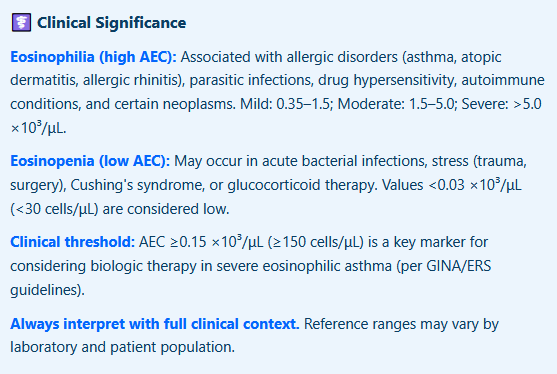
Clinical Significance of Absolute Eosinophil Count (AEC)
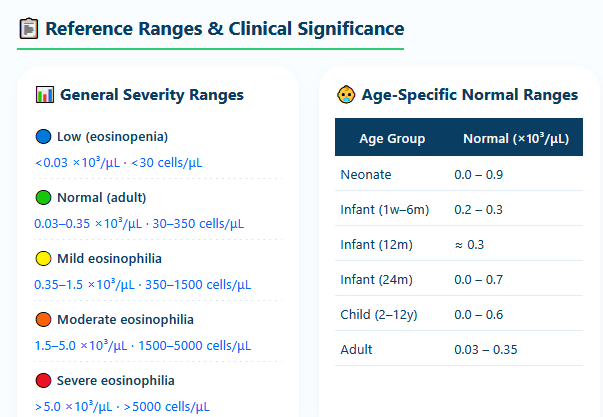
Absolute Eosinophil Count (AEC) is a valuable hematological parameter that reflects the actual number of eosinophils circulating in the blood. Unlike eosinophil percentage, AEC provides a more accurate clinical picture because it accounts for total white blood cell count. This makes it especially important for diagnosis, disease monitoring, and treatment response evaluation.
An elevated AEC (eosinophilia)often indicates allergic conditions such as bronchial asthma, allergic rhinitis, or drug hypersensitivity reactions. It is also commonly associated with parasitic infections, particularly those involving tissue invasion. In some cases, persistently high eosinophil counts may point toward autoimmune disorders, certain malignancies, or hypereosinophilic syndromes, which can cause organ damage if left untreated.
A low AEC (eosinopenia) may be seen in acute infections, stress responses, or following corticosteroid therapy. Although less commonly discussed, reduced eosinophil levels can still provide useful clues about immune suppression or systemic stress.
Overall, AEC plays a crucial role in guiding clinicians toward the underlying cause of inflammation or immune activation and helps determine the need for further investigations or specialist referral.

Signs and Symptoms Associated With Abnormal Absolute Eosinophil Count
The signs and symptoms related to abnormal AEC vary depending on the underlying condition and the severity of eosinophil imbalance.
Symptoms of High Absolute Eosinophil Count (Eosinophilia)
Recurrent or persistent allergies
Wheezing, shortness of breath, or asthma-like symptoms
Skin rashes, itching, or eczema
Chronic cough or nasal congestion
Gastrointestinal discomfort, diarrhea, or abdominal pain (especially in parasitic infections)
Fatigue or unexplained weakness
Organ-related symptoms (heart, lungs, or nervous system) in severe or prolonged cases
Symptoms of Low Absolute Eosinophil Count (Eosinopenia)
- Often asymptomatic
- Signs of acute infection or severe stress
- Possible immune suppression in prolonged cases
How the Absolute Eosinophil Count (AEC) Calculator Works
The Absolute Eosinophil Count (AEC) Calculator is a simple digital tool designed to convert eosinophil percentage into an actual cell count. Since laboratory reports often display eosinophils as a percentage of total white blood cells, this calculator helps eliminate manual calculation errors and saves time for both healthcare professionals and patients.
By entering the total white blood cell (WBC) count and the eosinophil percentage, the calculator instantly applies the standard formula to generate the absolute eosinophil value in cells per microliter (cells/µL). This result provides a clearer and more clinically useful measurement than percentage values alone.
Why Use an Absolute Eosinophil Calculator Instead of Manual Calculation?
Manual calculation of AEC can sometimes lead to rounding mistakes, especially when large WBC values are involved. The calculator ensures consistent and accurate results by performing the calculation automatically. It is especially useful in busy clinical settings, online health platforms, and educational environments where quick interpretation is required.
Using an automated calculator also improves understanding for non-medical users by presenting results in an easy-to-read format without complex mathematical steps.
Step-by-Step Guide to Using the AEC Calculator
- Enter the Total WBC Count as reported in the complete blood count test.
- Input the Eosinophil Percentage (%) from the same laboratory report.
- Click the Calculate button.
- View the Absolute Eosinophil Count (cells/µL) instantly.
For accurate results, ensure both values come from the same blood sample and recent laboratory testing.
Interpretation of AEC Calculator Results
The calculator output should always be interpreted in combination with clinical symptoms and other laboratory findings. A higher-than-normal AEC may suggest allergic reactions, parasitic infections, or inflammatory conditions, while a lower value can be associated with acute illness or medication effects.
The calculator itself does not provide a diagnosis; it serves as a supportive tool to assist in understanding laboratory data.
Benefits of an Online Absolute Eosinophil Count Calculator
- Provides fast and reliable results
- Reduces calculation errors
- Easy to use for patients and clinicians
- Helpful for monitoring trends over time
- Suitable for educational and informational purposes
Limitations of the AEC Calculator
Although the calculator is accurate mathematically, it depends entirely on the correctness of the entered values. Incorrect WBC counts or eosinophil percentages will produce misleading results. Additionally, temporary changes in eosinophil levels can occur due to infections, stress, or medications, which should be considered during interpretation.
Summary
The Absolute Eosinophil Count is a clinically significant marker that helps identify allergic, infectious, inflammatory, and immune-related disorders. Evaluating AEC alongside clinical findings and other laboratory tests allows for more accurate diagnosis and better patient management.
Disclaimer
The Absolute Eosinophil Count (AEC) Calculator and related information are provided for educational purposes only. This tool does not replace professional medical advice, diagnosis, or treatment. Results may vary based on individual health conditions and should always be interpreted by a qualified healthcare professional. The website is not responsible for any decisions made based on the use of this calculator. Always consult a doctor for medical concerns.