Hospital and Biomedical Waste Management in the 21st Century
An Overlooked Driver of Disease Emergence—and a Platform for Innovation
1.Introduction: A Paradox of Modern Healthcare
In the 21st century, more than 70 million healthcare workers are engaged globally across research laboratories, community hospitals, medical centers, clinical and diagnostic laboratories, specialty hospitals, and cancer institutes. Their work has led to remarkable achievements: the elimination of certain infectious diseases, advanced cancer therapies, rapid vaccine development, and life-saving diagnostic technologies.
Yet, paradoxically, new diseases continue to emerge almost every year. While factors such as climate change, urbanization, global travel, and microbial evolution are often discussed, one critical issue remains under recognized: hospital and biomedical waste management.
Waste generated during medical care and laboratory research—if poorly managed—can silently contribute to the spread, persistence, and even evolution of disease. In this sense, waste is no longer just an operational concern; it has become a global health security issue.
2. Biomedical Waste: When Healing Materials Become Health Threats
Hospitals and laboratories exist to protect life, but the materials they discard can pose serious risks if not controlled. Biomedical waste may contain:
- Infectious microorganisms
- Toxic chemicals and pharmaceuticals
- Antibiotic residues
- Sharps capable of causing injury
- Genetically altered or drug-resistant organisms
When this waste enters the environment through improper segregation, treatment, or disposal, it can contaminate water systems, soil, air, and food chains, creating new pathways for disease transmission.
3. Is Poor Waste Management Contributing to New Disease Emergence?
Yes—indirectly but significantly.
Improper hospital and laboratory waste management can lead to:
- Continuous low-level exposure of pathogens to the environment
- Survival of partially treated microorganisms
- Spread of antimicrobial-resistant organisms
- Occupational infections among healthcare and sanitation workers
- Community exposure through scavenging, recycling, or water contamination
Over time, these conditions create ideal ecosystems for pathogens to adapt, persist, and re-enter human populations—sometimes in more resistant or virulent forms.
4. The Expanding Scale of Biomedical Waste in Modern Medicine
Modern healthcare generates more waste than ever before due to:
- Single-use medical devices
- Increased laboratory testing
- Advanced imaging and diagnostics
- Mass vaccination campaigns
- High patient turnover in urban hospitals
Without innovation, traditional waste systems are overwhelmed, especially in low- and middle-income regions, increasing global vulnerability.
5. Rethinking Hospital and Biomedical Waste Management as Disease Prevention
Biomedical waste management must be reframed—not as housekeeping, but as a core disease-prevention strategy, equal in importance to vaccination, diagnostics, and treatment.
This shift requires:
- Scientific innovation
- Digital monitoring
- Policy reform
- Behavioral change among healthcare workers
6. Innovation Ideas for 21st-Century Biomedical Waste Management
1. Smart Waste Segregation Systems
Introduce sensor-based and AI-assisted waste bins that:
- Detect incorrect waste disposal
- Alert staff in real time
- Track waste generation patterns by department
This reduces human error and improves compliance.
2. On-Site Microbial Neutralization Technologies
Develop compact, hospital-level systems that:
- Neutralize pathogens using advanced heat, plasma, or enzymatic treatment
- Prevent transport of untreated infectious waste
- Reduce dependence on centralized incineration
3. Antimicrobial Resistance–Aware Waste Treatment
Waste systems should be designed to fully destroy antibiotic residues and resistant genes, not just visible pathogens. This could help slow the global antimicrobial resistance crisis.
4. Digital Waste Traceability (Waste Passports)
Each waste batch could carry a digital identity, recording:
- Source department
- Waste category
- Treatment method
- Final disposal point
This improves accountability and outbreak investigation.
5. Green and Circular Biomedical Waste Innovation
Research into:
- Biodegradable medical consumables
- Recyclable non-infectious plastics
- Energy recovery from safely treated waste
This protects the environment while reducing healthcare’s carbon footprint.
7. Strengthening Core Practices: What Must Never Be Ignored
While innovation is essential, basic principles remain the foundation:
- Segregation at the point of generation
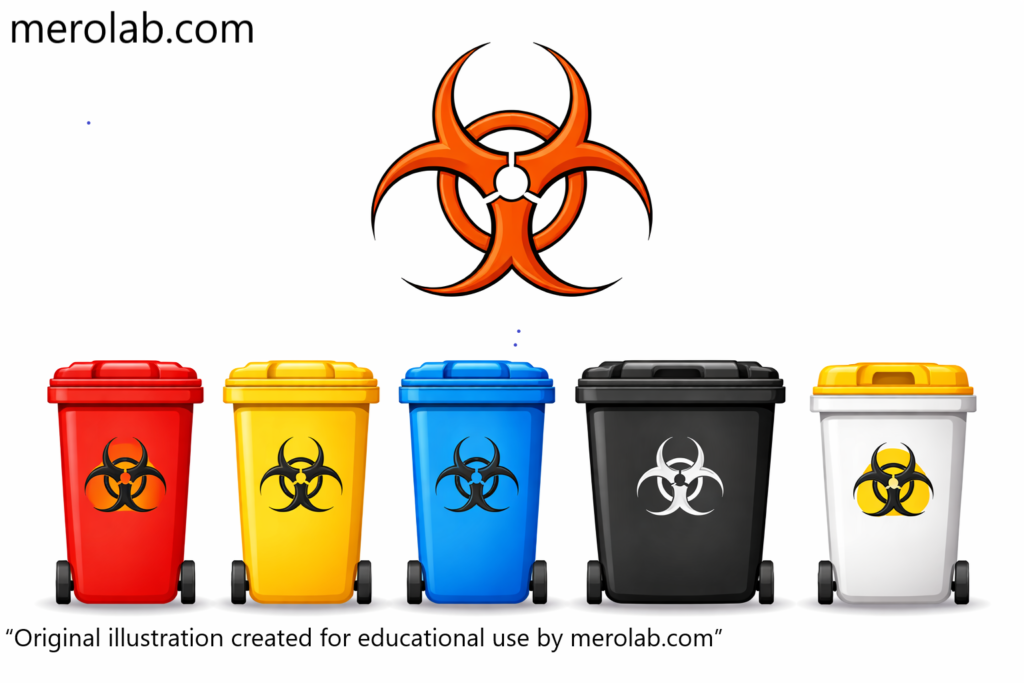
- Color-coded containers
- Safe sharps handling
- PPE usage
- Proper documentation and training
No technology can compensate for poor fundamentals.
8. Protecting the Invisible Workforce
Waste handlers, cleaners, and sanitation staff are among the most exposed yet least recognized healthcare workers. Modern waste policies must prioritize:
- Vaccination
- Training
- Injury reporting systems
- Dignity and safety
Protecting them protects the entire healthcare system.
9. Global Guidance, Local Responsibility
Organizations such as WHO and CDC emphasize waste minimization, risk-based classification, staff training, and environmental responsibility. However, implementation must be local, consistent, and enforced—not merely documented.
10. Conclusion: Waste Management as the Next Medical Frontier
In the age of advanced genomics, AI diagnostics, and rapid vaccine innovation, hospital and biomedical waste management remains one of the weakest links in global health defense.
If mismanaged, it can quietly contribute to disease emergence.
If managed wisely and innovatively, it can become a powerful tool for disease prevention.
The future of medicine does not depend only on discovering new cures but also on how responsibly we handle what remains after care is delivered.
Safe biomedical waste management is not the end of healthcare. it is the beginning of sustainable health security.