Laboratory Equipment’s and Tools
Why ? Every Laboratory Professional Should Know Their Equipment and Consumables.
In the 21st century, laboratories are the backbone of healthcare, research, and diagnostics. Today, we have access to cutting-edge technology real-time PCR machines, automated hematology analyzers, and next-generation gene sequencers. But let’s be real: not every lab can afford these high-tech systems. Many laboratories still rely on basic, routine equipment and consumables to perform essential work safely and accurately.
That’s why it’s so important for every technician, clinician, laboratory technologist, scientist, and researcher to truly understand the tools they work with. Knowing the purpose, proper use, and limitations of your equipment isn’t just convenient it directly affects the accuracy, reliability, and credibility of every laboratory report.
When you handle samples properly, you:
- Improve diagnostic precision – Accurate testing means better patient outcomes and more reliable research results.
- Reduce errors – Mistakes are costly, both for patients and for your lab’s reputation.
- Build trust in healthcare systems – Every report you produce reflects your skill and professionalism.
But there’s more at stake than results. Labs deal with biological specimens and hazardous materials every single day. Improper handling, inadequate sterilization, or careless disposal of bio hazardous waste can lead to serious consequences – not just for you or your coworkers, but for the community, society, and even the world. The recent global pandemics remind us that every small action in the lab matters on a global scale.
As a laboratory professional, you have a responsibility to:
- Maintain sample integrity and report accuracy – Correct use of instruments ensures reproducible and trustworthy results, which are the foundation of patient care and scientific research.
- Ensure biosafety and prevent contamination – Proper handling, sterilization, and disposal of hazardous materials protect you, your team, and the environment.
- Increase laboratory efficiency and productivity – Understanding the capabilities and limitations of your equipment helps your team work smarter, not harder, saving time and resources.
- Promote global health security – Even the simplest lab practices, done correctly, can prevent local infections from escalating into national or global outbreaks.
Here’s the key takeaway: knowledge is just as important as equipment. You don’t need the most expensive or high-tech machines to make a difference. What matters is your understanding, skill, and sense of responsibility.
By learning about laboratory tools – from absorbent pads to advanced gene sequencers—you can:
- Produce high-quality, accurate laboratory reports
- Protect yourself, your patients, and your community from biohazard risks
- Contribute meaningfully to scientific progress and public health
- Uphold the highest standards in ISO-compliant and quality-focused laboratories
This list of laboratory instruments and consumables is designed to provide foundational knowledge—the building blocks that every laboratory professional must know. Mastering these basics ensures that laboratories, no matter their size or budget, can operate safely, efficiently, and responsibly, protecting not only their patients but the wider world.
In an era where technology is advancing at lightning speed, the true power lies not just in machines, but in knowledge, precision, and responsibility.
- Absorbent Pads
Definition :
Absorbent pads are specially manufactured sheets made from highly absorbent materials such as cellulose. They are placed beneath biological or chemical samples during collection, transport, or storage to absorb accidental leaks or spills.
Importance in the Laboratory:
Absorbent pads play an important role in maintaining laboratory safety and cleanliness. They help prevent the spread of hazardous substances, reduce the risk of cross-contamination, and protect work surfaces. Their use is especially important when handling biological specimens where leakage could compromise sample integrity or expose personnel to health risks.
- Agarose
Definition:
Agarose is a purified natural polysaccharide obtained from seaweed. In laboratories, it is commonly used to prepare gels for electrophoresis, a technique that separates DNA or RNA fragments based on size.
Importance in the Laboratory:
Agarose is essential in molecular biology and genetics. It allows students and researchers to visualize nucleic acids, analyze genetic material, confirm PCR results, and study DNA fragments accurately. Without agarose gels, many genetic experiments would not be possible.
- Alcohol Swab
Definition:
An alcohol swab is a small disposable pad saturated with alcohol, usually 70% isopropyl alcohol. It is used to clean skin or laboratory surfaces before and after procedures.
Importance in the Laboratory:
Alcohol swabs reduce the number of microorganisms on surfaces and skin. They are critical for infection control during blood collection, injections, and sample handling, ensuring both patient safety and sample purity.
- Aluminum Seals
Definition:
Aluminum seals are thin sheets of aluminum foil designed to tightly cover microplates, vials, or containers during experiments or storage.
Importance in the Laboratory:
These seals help prevent evaporation, contamination, and accidental spillage. They are especially useful in long experiments or sample storage where maintaining concentration and sterility is essential.
- Anaerobic Jar
Definition:
An anaerobic jar is a sealed container designed to remove oxygen from its internal environment, creating conditions suitable for the growth of anaerobic microorganisms.
Importance in the Laboratory:
Anaerobic jars are vital in microbiology laboratories for culturing bacteria that cannot survive in oxygen. They enable accurate identification and study of anaerobic infections and organisms.
- Analytical Balance
Definition:
An analytical balance is a highly sensitive weighing instrument capable of measuring very small masses with extreme precision, often up to 0.1 mg or less.
Importance in the Laboratory:
Accurate weighing is critical for preparing reagents, standards, and solutions. Analytical balances ensure reproducibility of experiments and reliability of laboratory results, particularly in chemistry and pharmaceutical labs.
- Antibiotic Discs
Definition:
Antibiotic discs are small paper discs impregnated with specific antibiotics and placed on agar plates inoculated with bacteria.
Importance in the Laboratory:
They are used in antimicrobial susceptibility testing to determine whether bacteria are sensitive or resistant to certain antibiotics. This information is essential for effective treatment decisions and infection control.
- Antibodies
Definition:
Antibodies are protective proteins produced by the immune system that target and attach to specific invaders, such as bacteria, viruses, or toxins, helping the body fight off disease. In laboratories, they are manufactured and used for diagnostic and research purposes.
Importance in the Laboratory:
Antibodies are fundamental in tests such as ELISA, immunohistochemistry, and rapid diagnostic assays. They help detect diseases, study immune responses, and support biomedical research.
- Applicator Stick
Definition:
An applicator stick is a sterile wooden or plastic stick used to apply, spread, or transfer samples in laboratory procedures.
Importance in the Laboratory:
Applicator sticks allow controlled and hygienic handling of samples. They reduce direct contact with specimens, helping maintain safety and accuracy during microbiological and diagnostic work.
- Autoclave
Definition:
An autoclave is a sterilization device that uses high-pressure steam at elevated temperatures to destroy microorganisms, including bacteria, viruses, and spores.
Importance in the Laboratory:
Autoclaves are essential for sterilizing culture media, instruments, and glassware. They prevent contamination and ensure that laboratory work is conducted under safe and controlled conditions.
- Autoclave Indicator Tape
Definition:
Autoclave indicator tape is a specially treated adhesive tape that changes color when exposed to specific temperature and steam conditions during autoclaving.
Importance in the Laboratory:
This tape provides a quick visual confirmation that sterilization conditions have been achieved. Although it does not guarantee sterility, it helps laboratory personnel verify that materials have been properly processed, supporting quality control and safety practices.
- Automated Hematology Analyzer
Definition:
An automated hematology analyzer is an advanced instrument used to count and analyze different types of blood cells using electronic or optical methods.
Importance in the Laboratory:
It allows rapid, accurate, and standardized blood analysis. These analyzers are essential in clinical laboratories for diagnosing anemia, infections, and blood disorders while reducing manual errors and workload.
- Bandage
Definition:
A bandage is a strip of material used to cover puncture sites or minor wounds following laboratory procedures such as blood collection.
Importance in the Laboratory:
Bandages protect the site from infection, stop bleeding, and promote healing. Their use is an important part of patient care and laboratory hygiene.
- Beaker
Definition:
A beaker is a cylindrical glass or plastic container with a flat bottom and open top, commonly marked with approximate volume graduations.
Importance in the Laboratory:
Beakers are widely used for mixing, heating, and holding liquids. Their versatility makes them essential for routine laboratory activities in chemistry, biology, and education labs.
- Cleaning Brushes
Definition:
Cleaning brushes are laboratory tools designed in various shapes and sizes to clean glassware such as test tubes, flasks, and bottles.
Importance in the Laboratory:
Proper cleaning of glassware prevents chemical residue and biological contamination, which could otherwise affect experimental accuracy and safety.
- Cleaning Solution
Definition:
Cleaning solutions are laboratory-approved detergents or chemical agents used to remove dirt, grease, and biological residues from surfaces and equipment.
Importance in the Laboratory:
They help maintain a clean and safe laboratory environment, reduce contamination risks, and ensure compliance with hygiene standards.
- Coagulation Analyzer
Definition:
A coagulation analyzer is a laboratory instrument used to measure blood clotting parameters such as prothrombin time (PT) and activated partial thromboplastin time (aPTT).
Importance in the Laboratory:
It is essential for diagnosing bleeding disorders, monitoring anticoagulant therapy, and assessing clotting function accurately and efficiently.
- Cold Trap
Definition:
A cold trap is a device that captures vapors by cooling them during vacuum-based laboratory procedures.
Importance in the Laboratory:
Cold traps protect vacuum pumps from damage, prevent release of harmful vapors, and maintain a safer laboratory environment.
- Colony Counter
Definition:
A colony counter is an instrument used to count visible microbial colonies grown on agar plates.
Importance in the Laboratory:
Accurate colony counting is important in microbiology for determining bacterial concentration, assessing contamination, and supporting research and quality control.
- Colorimeter
Definition:
A colorimeter is an analytical instrument that measures the intensity of color in a solution to determine the concentration of a substance.
Importance in the Laboratory:
It is commonly used in biochemical assays and clinical testing to provide quantitative results in a simple and cost-effective manner.
- Computer & LIS Software
Definition:
Computers in a laboratory are used for data entry, processing, and management, while Laboratory Information System (LIS) software is specialized software designed to handle laboratory data, track samples, and generate reports.
Importance:
Computers with LIS software streamline laboratory workflow, reduce human errors, and improve the accuracy and traceability of test results. They are essential for storing patient records, managing inventory, and integrating diagnostic equipment for faster decision-making.
- Centrifuge
Definition:
A centrifuge is a laboratory device that spins samples at high speeds to separate components based on density, such as separating blood plasma from cells.
Importance:
Centrifugation is a fundamental step in many laboratory procedures, from clinical diagnostics to molecular biology experiments. It ensures proper separation of sample components for accurate testing and analysis.
- Pipettes & Micropipettes
Definition:
Pipettes are tools used to measure and transfer precise volumes of liquids. Micropipettes are specialized pipettes designed for very small volumes, typically in microliters.
Importance:
Accurate liquid handling is critical in a laboratory. Pipettes ensure precision and reproducibility in experiments, which is crucial for valid results in diagnostics and research.
- Autoclave
Definition:
An autoclave is a device that uses pressurized steam to sterilize laboratory equipment, media, and instruments.
Importance:
Sterilization prevents contamination, ensures the safety of laboratory personnel, and maintains the integrity of experiments and clinical tests. Autoclaves are indispensable in microbiology and molecular laboratories.
- Incubator
Definition:
An incubator is a device that maintains optimal temperature, humidity, and sometimes CO₂ levels for the growth of microorganisms or cell cultures.
Importance:
Incubators are essential for cultivating bacteria, viruses, or mammalian cells under controlled conditions. They ensure proper growth and reliable experimental or diagnostic results.
- Refrigerator & Freezer
Definition:
Refrigerators and freezers are used to store biological samples, reagents, and chemicals at controlled low temperatures to preserve their stability and activity.
Importance:
Proper cold storage prevents degradation of samples and reagents, ensuring the accuracy of laboratory tests and prolonging the shelf-life of sensitive materials.
- Water Purification System
Definition:
Laboratory water purification systems remove impurities, ions, and microorganisms from water to produce ultra-pure water suitable for experiments.
Importance:
Pure water is critical in molecular biology, microbiology, and clinical tests, as contaminants can interfere with reactions, compromise results, or damage equipment.
- Balances (Analytical & Electronic)
Definition:
Laboratory balances are precision instruments used to measure the mass of chemicals, reagents, or samples. Analytical balances are highly precise for small quantities, while electronic balances offer ease and speed for routine measurements.
Importance:
Accurate weighing is essential for reagent preparation, standardization, and reproducibility of experiments. Even minor errors in weight can lead to significant deviations in results.
- pH Meter
Definition:
A pH meter is an electronic device used to measure the acidity or alkalinity of solutions.
Importance:
Many chemical and biological reactions are sensitive to pH. Accurate pH measurement ensures proper reaction conditions, which is vital for experiments, quality control, and clinical assays.
- Laboratory Glassware (Beakers, Flasks, Pipettes)
Definition:
Laboratory glassware includes beakers, flasks, test tubes, and other containers used to hold, mix, heat, or measure liquids and chemicals.
Importance:
Glassware is fundamental for virtually every laboratory task. Proper usage ensures safety, accuracy in measurements, and prevents contamination of samples.
- Vortex Mixer
Definition:
A vortex mixer is a laboratory device that uses rapid circular motion to mix small volumes of liquids in test tubes or microcentrifuge tubes.
Importance:
Vortexing ensures uniform mixing of samples, reagents, or buffers, which is crucial for consistent experimental outcomes, especially in molecular biology and microbiology labs.
- Water Bath (Including Flotation Bath)
Definition:
A water bath is a piece of laboratory equipment that maintains a stable temperature for heating samples gently. A flotation bath is a specialized water bath used to float tissue sections for histology work.
Importance:
Water baths provide controlled heating for enzymatic reactions, incubation of samples, and melting of reagents. Flotation baths are vital for preparing thin tissue sections without damaging them, ensuring high-quality microscopy results.
- UV Sterilizer
Definition:
A UV sterilizer uses ultraviolet light to disinfect laboratory surfaces, instruments, and air by destroying microorganisms.
Importance:
UV sterilization reduces contamination risks in microbiology, molecular biology, and clinical laboratories, maintaining a safe and sterile working environment.
- UV Transilluminator
Definition:
A UV transilluminator is a device that emits ultraviolet light to visualize nucleic acids, such as DNA or RNA, stained with fluorescent dyes in gel electrophoresis.
Importance:
This tool allows researchers and laboratory professionals to detect and analyze genetic material. It is essential for molecular diagnostics, PCR verification, and genetic research.
- Vacutainer Tubes & Holders
Definition:
Vacutainer tubes are pre-labeled blood collection tubes containing specific additives for different tests. Vacutainer holders are devices used to safely hold and guide the needle and tube during collection.
Importance:
Vacutainers ensure safe, sterile, and standardized blood collection. They minimize contamination and allow accurate diagnostic testing across hematology, biochemistry, and serology.
- Urine Containers
Definition:
Urine containers are sterile, leak-proof containers used to collect and transport urine samples for laboratory testing.
Importance:
Proper urine collection is critical for accurate urinalysis, culture, and biochemical tests. Sterile containers prevent contamination and preserve the sample’s integrity.
- Volumetric Flask
Definition:
A volumetric flask is a laboratory glassware item designed for precise preparation of solutions at a specific volume.
Importance:
Volumetric flasks ensure accurate concentrations of reagents, which is essential for reproducible experiments, Titration, and quality control tests.
- Wash Buffers
Definition:
Wash buffers are solutions used to rinse or wash laboratory samples, such as cells, tissue sections, or Microplates, to remove excess reagents.
Importance:
Washing with proper buffers prevents background interference, reduces contamination, and ensures accurate results in assays like ELISA or Immunohistochemistry.
- Microplates & Microplate Readers
Definition:
Microplates are flat plates with multiple wells used to perform experiments on small volumes, often in 96- or 384-well formats. Microplate readers are instruments that detect and quantify signals from reactions in the wells.
Importance:
Microplates allow high-throughput testing, saving time and reagents. Microplate readers provide precise quantification of biochemical, enzymatic, or immunological reactions.
- Microscope (Binocular/Trinocular)
Definition:
A microscope is an optical instrument used to magnify and observe small specimens. Binocular microscopes have two eyepieces, while trinocular microscopes have an additional port for cameras or imaging systems.
Importance:
Microscopy is fundamental in diagnostics, research, and pathology. Trinocular microscopes allow digital documentation and sharing of images, aiding teaching, reporting, and telemedicine.
- Microtome
Definition:
A microtome is a device used to cut extremely thin slices of tissue for microscopic examination.
Importance:
Microtomy is essential in histopathology. Thin tissue sections allow accurate staining, observation, and diagnosis of diseases at the cellular level.
- Molecular Grade Reagents
Definition:
Molecular grade reagents are high-purity chemicals specifically prepared for molecular biology experiments, free of Nucleases and contaminants.
Importance:
Using molecular grade reagents ensures reliability and accuracy in PCR, sequencing, cloning, and other sensitive molecular assays. Contaminated reagents can invalidate experiments.
- Microcentrifuge Tubes (0.5 ml, 1.5 ml, 2 ml)
Definition:
Small plastic tubes used for Centrifugation, storage, and handling of small-volume samples.
Importance:
Micro centrifuge tubes are standard in molecular biology and clinical laboratories. They allow precise handling of tiny samples without contamination or loss.
- Micro centrifuge
Definition:
A micro centrifuge is a compact centrifuge designed for small volumes, typically in micro centrifuge tubes.
Importance:
Microcentrifuges are essential for separating cellular components, nucleic acids, or proteins quickly and efficiently in research and clinical labs.
- Xylene
Definition:
Xylene is a chemical solvent commonly used in histology and pathology laboratories for tissue processing, clearing, and slide preparation.
Importance:
Xylene removes alcohol from tissue sections during processing, allowing proper infiltration with paraffin. It ensures tissue preservation and high-quality staining for microscopic examination.
- McFarland Standard
Definition:
McFarland standards are reference solutions used to estimate the concentration of bacterial suspensions by turbidity.
Importance:
They standardize bacterial inoculums for antimicrobial susceptibility testing, ensuring reproducible and reliable results in microbiology labs.
- Measuring Cylinder
Definition:
A measuring cylinder is a graduated glass or plastic tube used to measure liquid volumes accurately.
Importance:
Accurate volume measurement is fundamental for reagent preparation, solution dilution, and quantitative experiments. Precision prevents errors in laboratory protocols.
- Tourniquet
Definition:
A tourniquet is a flexible band applied around a patient’s limb to temporarily restrict blood flow during venipuncture.
Importance:
It facilitates easier vein access for blood collection, ensuring safe and efficient phlebotomy while minimizing patient discomfort.
- UPS & Voltage Stabilizer
Definition:
Uninterruptible Power Supply (UPS) and voltage stabilizers protect laboratory instruments from power fluctuations and outages.
Importance:
Sensitive equipment, such as centrifuges, incubators, and molecular devices, require stable power to function properly. These systems prevent data loss, equipment damage, and experimental failures.
- Turbidimeter / Spectrophotometer (if used in your lab)
Definition:
A turbidimeter or spectrophotometer measures the optical density of liquids to quantify concentrations of cells, particles, or chemicals.
Importance:
These instruments provide critical quantitative data for microbiology, biochemistry, and molecular experiments, ensuring reproducibility and accuracy.
- Wash Buffer (Additional Notes)
Definition:
Wash buffers can vary in composition (PBS, TBS, or other proprietary buffers) depending on their intended application.
Importance:
Using the correct wash buffer prevents sample damage, maintains molecular integrity, and reduces experimental background noise, particularly in immunoassays or ELISA testing.
52. Automated / Digital Centrifuge
Definition:
An advanced centrifuge with programmable speeds, timers, and safety features, often with digital displays for precise control.
Importance:
Digital centrifuges reduce manual errors, increase reproducibility, and allow safe handling of sensitive samples. ISO-certified labs prefer them for their accuracy, traceability, and user-friendly interface.
53. Electronic / Automated Pipettes
Definition:
Pipettes with digital volume setting, programmable dispensing, and ergonomic design for high-precision liquid handling.
Importance:
These pipettes minimize repetitive strain injuries, improve accuracy for small volumes, and ensure consistency in experiments. They are highly recommended for ISO labs where precision and documentation of results are critical.
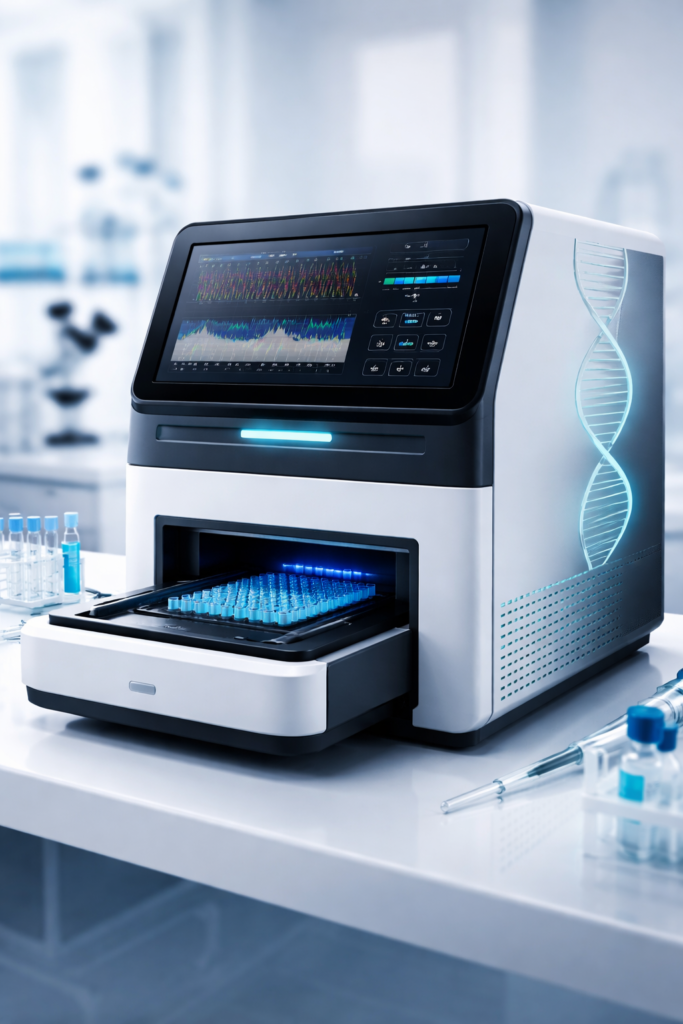
54. Real-Time PCR Machine (qPCR)
Definition:
A highly sensitive molecular biology instrument that amplifies and quantifies DNA/RNA in real-time, often with multiplexing capabilities.
Importance: Real-time PCR allows rapid, accurate, and quantitative detection of pathogens or genetic material. ISO-certified labs prefer qPCR for its high reproducibility, digital data output, and traceable results.
55. Automated Hematology Analyzer
Definition:
A modern instrument that provides complete blood counts, differential counts, and other hematological parameters automatically.
Importance:
Automated analyzers reduce human error, speed up reporting, and provide standardized results. They are essential for ISO-compliant laboratories, as they ensure accurate and reproducible hematology testing.
56. Multi-Mode Microplate Reader
Definition:
A plate reader capable of detecting absorbance, fluorescence, luminescence, and other signals in microplate-based assays.
Importance:
Multi-mode readers are versatile for ELISA, enzyme activity, and molecular assays. They improve throughput and precision, which is preferred for laboratories maintaining ISO quality standards.
57. Smart Incubator
Definition:
An incubator with precise control of temperature, humidity, and CO₂ levels, often with remote monitoring and digital data logging.
Importance:
Smart incubators provide optimal growth conditions for cells and microorganisms with minimal risk of contamination. ISO-certified labs rely on them for traceable and reproducible culture conditions.
58. Advanced Spectrophotometer / Turbidimeter
Definition:
Modern instruments with digital interface, high sensitivity, and multiple measurement modes for optical density, turbidity, or chemical concentrations.
Importance:
These instruments ensure accurate and reproducible measurements, which are critical for research, diagnostics, and ISO-compliant quality control.
59. Automated Sample Storage Systems
Definition:
Robotic or digital storage systems for controlled temperature preservation of biological samples, reagents, and chemicals.
Importance:
These systems enhance sample safety, traceability, and accessibility. They are highly recommended for ISO labs where sample integrity and documentation are mandatory.
60. Illumina Gene Sequencing Machine
Definition:
Illumina sequencers are next-generation sequencing (NGS) instruments that read millions of DNA fragments in parallel to determine the precise order of nucleotides in a genome.
Importance: Illumina systems are widely used in genomics, molecular diagnostics, and research due to their high accuracy, scalability, and reproducibility. They allow detection of genetic variations, mutations, and microbial identification at a very high resolution. ISO-certified laboratories prefer Illumina sequencers because they provide traceable, standardized, and highly reproducible sequencing data, which is essential for clinical and research applications.
61. Oxford Nanopore (Oxford Nanopore Technologies) Sequencer
Definition:
Oxford Nanopore sequencing platforms use nanopore technology to read long DNA or RNA fragments in real-time by detecting changes in electrical current as nucleotides pass through nanopores.
Importance: Nanopore sequencers allow rapid, portable, and long-read sequencing, making them ideal for field studies, pathogen surveillance, and real-time diagnostics. ISO laboratories value Oxford Nanopore systems for their flexibility, real-time data acquisition, and ability to sequence whole genomes efficiently, while maintaining reproducibility and compliance with quality standards.
Key Differences & Complementarity:
- Illumina: Ultra-accurate short-read sequencing, ideal for detailed genomic studies and clinical diagnostics.
- Oxford Nanopore: Real-time long-read sequencing, ideal for detecting large structural variations and rapid pathogen identification.
Both platforms are considered state-of-the-art in molecular biology labs and are essential for modern ISO-certified laboratories focusing on genomics, infectious disease surveillance, and personalized medicine.