

Table of Contents
- What Is a Sperm Sample for Analysis?
- Why Proper Collection Makes a Difference
- How to Prepare Before Collection
- 7 Essential Steps: How to Collect a Sperm Sample for Analysis
- At Home vs. At the Clinic — Which Is Better?
- What the Laboratory Checks in Your Sample
- Common Mistakes That Ruin Results
- Special Situations: Post-Vasectomy & Difficulty Ejaculating
- Conclusion
- Frequently Asked Questions (FAQs)
Introduction
How to collect a sperm sample for analysis is one of the most important questions men face when starting a fertility investigation. Done correctly, the process is quick, private, and straightforward. Done incorrectly, it can produce misleading results, and you may need to repeat the test.
This guide brings together the most accurate, up-to-date advice from leading medical institutions. It covers everything from preparation to delivery, in plain and simple language.
1. What Is a Sperm Sample for Analysis?
A sperm sample for analysis also known as a semen analysis is a laboratory test that checks the health and quantity of sperm in semen.
It is commonly requested when a couple is having difficulty conceiving. It is also used after a vasectomy to confirm the procedure was successful.
The test measures:
- Total Sperm count – total number of sperm per millilitre (ml)
- Motility – how well and how fast the sperm move
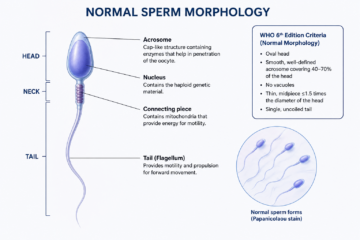
- Morphology of sperm – the size and shape of sperm
- Volume – total amount of semen produced
- pH level – acidity of the semen
- White blood cells – signs of possible infection

2. Why Proper Collection Makes a Difference
How to Collect a Sperm Sample for Analysis. The way you collect a sperm sample for analysis directly affects how reliable your results are. Sperm are highly sensitive to temperature, time, and contamination.
A poorly collected sample can show a falsely low sperm count, reduced motility, or abnormal shape. This may lead to unnecessary worry or even incorrect treatment.
Following the correct steps is not optional – it is essential for results your doctor can trust.
Avoid These in the Days Before Collection
- Alcohol – Avoid at least 48–72 hours before
- Hot baths, saunas, or tight underwear – heat reduces sperm quality
- Smoking and recreational drugs
- Certain medications – always inform your doctor beforehand
Use Only a Clinic-Provided Sterile Container
Always use the wide-mouthed sterile specimen pot given by your clinic or lab. Do not wash or rinse it. Household jars, glass containers, or regular condoms are completely unsuitable – they can contaminate the sample and destroy sperm.
4. 7 Essential Steps: How to Collect a Sperm Sample for Analysis
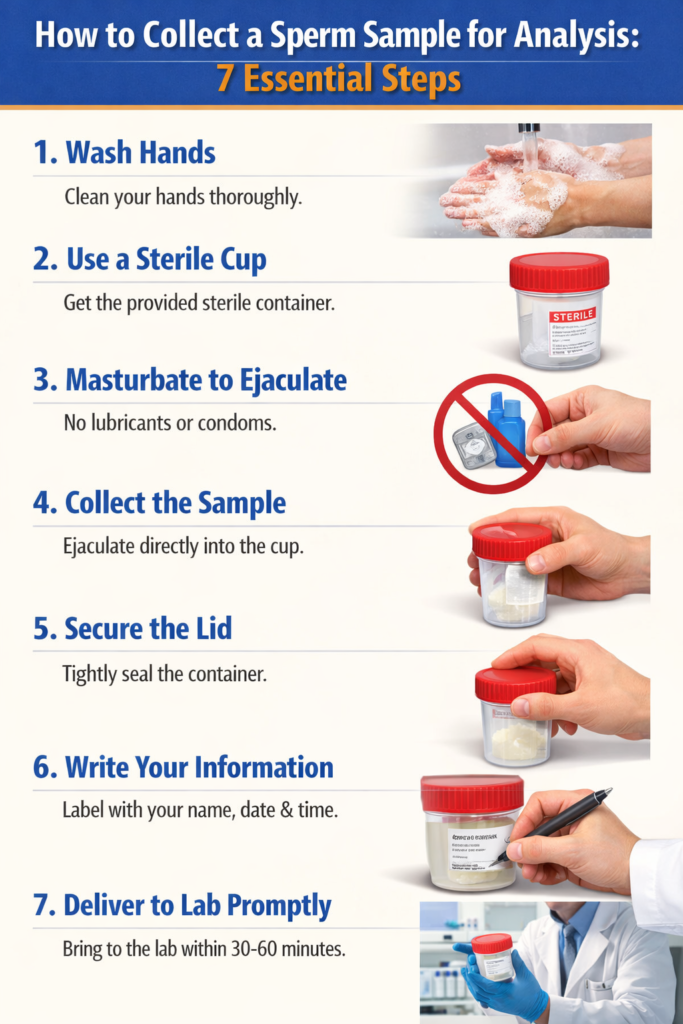
Follow all 7 steps carefully each time you collect a sperm sample for analysis:
Step 1 – Wash Your Hands Thoroughly
Wash your hands with soap and warm water. Dry with a clean towel. This simple step prevents bacteria from contaminating your sample.
Step 2 – Prepare the Sterile Container
Open the lid of the sterile container only just before collection. Do not touch the inside of the container or lid at any point.
Step 3 – Collect by Masturbation
The only medically accepted method to collect a sperm sample for analysis is masturbation directly into the container. This is the global standard used by all fertility clinics and labs. Do not use lubricants, saliva, or oils; even small amounts can kill sperm.
Step 4 – Collect the Entire Ejaculate
Make sure every drop of the ejaculate goes into the container. The very first portion contains the highest concentration of sperm. Missing even a small amount will affect your results – inform the lab if this happens.
Step 5 – Seal and Label Immediately
Screw the lid on tightly straight after collection. Label the container with your full name, date of birth, and exact collection time. Some labs also require your doctor’s name or health number.
Step 6 – Keep at Body Temperature
Sperm die quickly in cold temperatures. Keep the container inside a jacket pocket or held against your body during transport. Never refrigerate or freeze the sample. Avoid extreme heat, too.
Step 7 – Deliver to the Lab Within 45–60 Minutes
Your sperm sample for analysis must reach the laboratory within 45 to 60 minutes of collection. The sooner, the more reliable the results. Call ahead to confirm the lab is expecting you.
5. At Home vs. At the Clinic - Which Is Better?
Collecting at the Clinic
Most fertility clinics have a private, comfortable, and lockable collection room on-site. This is the most reliable option – the sample goes straight to the lab with no transport delay.
Collecting at Home
Home collection is allowed at many labs. If you do this, deliver the sample within 60 minutes, keep it at body temperature, and book a specific time with the lab in advance. Do not just walk in – some labs do not accept drop-in samples.
Special Collection Condoms
If masturbation is not possible for personal or religious reasons, ask your doctor for a special non-toxic semen collection condom. Never use a regular condom – spermicide coatings destroy sperm completely.
3. How to Prepare Before Collection
Follow the Abstinence Rule (2–5 Days)
Avoid ejaculation for 2 to 5 days before your sperm sample collection. This is the ideal window for the most accurate sperm count.
Less than 2 days may reduce the sperm count
More than 5–7 days can reduce motility and increase abnormal forms
6. What the Laboratory Checks in Your Sample
After receiving your sperm sample for analysis, a trained specialist called an andrologist examines it under a microscope.
Your report will include:
- Volume – normal is ≥ 1.5 mL per ejaculate
- Sperm count – normal is ≥ 15 million sperm per mL
- Progressive motility – normal is ≥ 32% moving sperm
- Normal morphology – normal is ≥ 4% correctly shaped sperm
- Liquefaction time – sperm should liquefy within 60 minutes.
- White blood cells – elevated levels may indicate infection
Results are usually provided within 48 hours. Your doctor will explain what the numbers mean and whether any follow-up is needed.
7. Common Mistakes That Ruin Results
When learning how to collect a sperm sample for analysis, knowing what NOT to do is just as important:
- Using a household container or regular condom — always use the clinic pot
- Not collecting the full ejaculate, even losing the first drop, affects the count
- Using any lubricant – even saliva kills sperm
- Refrigerating the sample – cold temperatures destroy sperm
- Waiting longer than 60 minutes before delivery
- Ignoring the 2–5 day abstinence window
- Not telling your doctor about medications or recent illness
- Collecting during or after a fever – illness temporarily reduces sperm quality
8. Special Situations
Post-Vasectomy Testing
If you are providing a sperm sample after a vasectomy, the rules differ slightly. Wait at least 12 weeks and have 20 ejaculations after the procedure. Follow the same 2–5 day abstinence rule. Most labs accept post-vasectomy samples at room temperature – but always call ahead to confirm.
Difficulty Ejaculating
If you have difficulty producing a sample, speak with your clinic before the appointment. Options available include non-spermicidal collection condoms, vibration-assisted ejaculation, electroejaculation (with a urologist), or surgical sperm extraction for specific medical conditions.
10. Key Takeaways
Quick Checklist – How to Collect a Sperm Sample for Analysis:
- Avoid ejaculation for at least two to five days before providing the semen sample to ensure accurate results.
- Use only the sterile container provided by your clinic
- Wash hands and genitals thoroughly before collection
- Collect by masturbation — no lubricants, no condoms
- Collect the entire ejaculate — missing any portion affects results
- Seal, label, and keep at body temperature immediately
- Deliver to the lab within 45–60 minutes
- Inform staff of any medications, illness, or incomplete sample
Conclusion
Knowing how to collect a sperm sample for analysis correctly is the first step toward getting results you and your doctor can rely on.
Every step – from abstinence to delivery – plays a role in the accuracy of your test. Small details matter far more than most people realize.
If you have any concerns before your appointment, speak to your clinic. The staff is experienced, professional, and there to help. There is absolutely nothing to feel embarrassed about.
For further information, visit the official NHS Semen Analysis Guide and the WHO Laboratory Manual for the Examination and Processing of Human Semen, both of which are globally recognised clinical references on how to collect a sperm sample for analysis.
Frequently Asked Questions (FAQs)
Do I need to provide more than one sperm sample?
Yes. The WHO recommends two separate semen analyses done 2–3 weeks apart before confirming any diagnosis. Sperm counts fluctuate naturally, so one test alone is not always enough.
Is collecting a sperm sample painful?
No. The process is completely non-invasive and painless.
What if my results are abnormal?
Abnormal results do not always mean permanent infertility. Your doctor will advise on next steps, which may include a repeat test, lifestyle changes, medication, or a specialist referral.
Can stress or illness affect my sperm sample?
Yes. A recent fever, illness, or significant stress can temporarily lower sperm count and motility. Always inform your doctor if you have been unwell in the past three months.
Is the sperm sample test confidential?
Absolutely. Laboratories maintain strict patient confidentiality. The process is routine, and clinic staff handle it professionally every day.