
🧪 eGFR Calculator
Understanding the eGFR Calculator App and Why You Need It
The eGFR calculator app has become an essential tool for millions of people worldwide who want to monitor their kidney health effectively. If you’re concerned about kidney function or have been advised by your doctor to track your eGFR levels, this revolutionary app can transform how you manage your health.
Estimated Glomerular Filtration Rate (eGFR) is a crucial blood test that determines how well your kidneys are filtering waste from your blood. The eGFR calculator app makes this complex medical calculation accessible to everyone, right from your smartphone or computer.
What Exactly Is an eGFR Calculator App?
An eGFR calculator app is a digital tool designed to estimate your kidney’s filtering capacity by analyzing specific health parameters. Unlike traditional methods that required waiting for lab results and doctor consultations, this app provides instant results.
The app works by taking into account several critical factors:
Your serum creatinine levels
- Age
- Gender
- Race or ethnicity
- Body size
These variables are processed through scientifically validated equations to give you an accurate estimate of your kidney function. According to the [National Kidney Foundation] (https://www.kidney.org/kidney-topics/estimated-glomerular-filtration-rate-egfr), eGFR is the best measure of kidney function and helps determine the stage of kidney disease.
Why the eGFR Calculator App Is Critically Important
Your kidneys perform over 400 functions daily, but their primary job is filtering waste. When kidney function declines, it happens silently. Most people don’t experience symptoms until kidney disease is advanced.
This is where the eGFR calculator app becomes life-saving.
Early Detection Saves Lives
Studies show that early detection of kidney disease dramatically improves treatment outcomes. The app allows you to:
- Monitor kidney function regularly
- Detect declining function before symptoms appear
- Track changes over time
- Share accurate data with your healthcare provider
- Make informed lifestyle decisions
How to Use the eGFR Calculator App Effectively
Using the eGFR calculator app is surprisingly simple, even if you’re not tech-savvy.
Step 1: Gather Your Information
Before opening the app, collect your latest blood test results. You’ll need your serum creatinine level, which your doctor provides after routine blood work.
Step 2: Input Your Data
Enter the following information accurately:
- Serum creatinine value (in mg/dL or μmol/L)
- Your age in years
- Gender (male or female)
- Race (some calculators include this factor)
Step 3: Calculate and Interpret
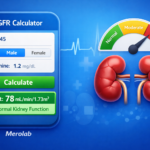
The app instantly calculates your eGFR value, typically measured in mL/min/1.73 m². Understanding your results:
- 90 or above: Normal kidney function
- 60-89: Mildly decreased function
- 45-59: Mild to moderate decrease
- 30-44: Moderate to severe decrease
- 15-29: Severe decrease
- Below 15: Kidney failure
Step 4: Track Your Progress
The best eGFR calculator apps allow you to save results and track trends over weeks, months, or years. This historical data is invaluable for your healthcare team.
Key Features of the Best eGFR Calculator Apps
Not all eGFR calculator apps are created equal. When choosing one, look for these powerful features:
Accuracy and Validation
The app should use validated equations like the CKD-EPI (Chronic Kidney Disease Epidemiology Collaboration) formula, which is currently the most accurate method according to research published in the National Institutes of Health (https://pmc.ncbi.nlm.nih.gov/articles/PMC4571157/).
User-Friendly Interface
Medical apps should simplify, not complicate. The interface should be clean, intuitive, and accessible for all age groups.
Data Tracking and History
Premium apps store your previous calculations, creating graphs and trends that show how your kidney function changes over time.
Educational Resources
Quality apps include information about kidney health, what affects eGFR, and when to seek medical attention.
Privacy and Security
Your health data is sensitive. Choose apps with strong encryption and clear privacy policies.
Who Should Use the eGFR Calculator App?
While anyone can benefit from monitoring their kidney health, certain groups should make the eGFR calculator app part of their regular health routine:
People with diabetes face a significantly higher risk of kidney disease. The app helps diabetics catch problems early when treatment is most effective.
Hypertension Patients
High blood pressure damages kidney blood vessels over time. Regular monitoring helps you and your doctor adjust treatment plans promptly.
Those With Family History
Kidney disease often runs in families. If your parents or siblings have kidney problems, monitoring your eGFR is crucial.
Elderly Population
Kidney function naturally declines with age. Seniors should track their eGFR to distinguish normal aging from disease.
Medication Users
Some medications can affect kidney function. If you take NSAIDs, certain antibiotics, or other nephrotoxic drugs, regular monitoring is essential.
Understanding the Science Behind eGFR Calculations
The eGFR calculator app uses sophisticated mathematical equations developed through extensive research. The most common formulas include:
CKD-EPI Equation
This is the gold standard, providing the most accurate estimates across different populations. The [National Kidney Foundation’s GFR calculator](https://www.kidney.org/professionals/gfr_calculator) uses this formula.
MDRD Equation
The Modification of Diet in Renal Disease equation was previously standard but has been largely replaced by CKD-EPI for better accuracy.
These equations account for the fact that creatinine levels vary based on muscle mass, age, and gender. A muscular young man and an elderly woman with the same creatinine level have very different kidney function.
Common Mistakes to Avoid When Using the App
Even with a user-friendly eGFR calculator app, people make errors that lead to misleading results.
Mistake 1: Using Outdated Blood Work:
Always use your most recent serum creatinine value. Results older than a few weeks may not reflect your current kidney function.
Mistake 2: Incorrect Unit Entry:
Creatinine can be measured in mg/dL or μmol/L. Entering the wrong unit produces wildly inaccurate results. Double-check which unit your lab used.
Mistake 3: Self-Diagnosis:
The app is a monitoring tool, not a diagnostic tool. Never make treatment decisions based solely on app results. Always consult healthcare professionals.
Mistake 4: Ignoring Trends:
A single reading tells part of the story. Pay attention to trends over multiple tests rather than obsessing over one result.
Mistake 5: Panic Over Minor Fluctuations:
eGFR can vary slightly due to hydration, recent meals, or exercise. Small changes don’t necessarily indicate problems
Maximizing the Benefits of Your eGFR Calculator App:
To get the most value from your eGFR calculator app, integrate it into a comprehensive kidney health strategy.
Regular Testing Schedule:
Work with your doctor to establish how often you should check your eGFR. For most people with risk factors, testing every 3-6 months is appropriate.
Lifestyle Modifications:
Use your eGFR results as motivation for healthy changes:
Maintain healthy blood pressure
- Control blood sugar if diabetic
- Stay well-hydrated
- Limit sodium intake
- Exercise regularly
- Avoid nephrotoxic substances
Communication With Healthcare Team: Share your app data during medical appointments. The visual trends can help your doctor make better treatment decisions.
Combine With Other Markers: eGFR is important, but it’s not the only kidney health indicator. Also monitor blood pressure, protein in urine, and other markers your doctor recommends.
The Future of eGFR Calculator Apps
Technology continues advancing, and eGFR calculator apps are becoming increasingly sophisticated.
Artificial Intelligence Integration
Newer apps use AI to predict future kidney function based on current trends and risk factors, enabling even earlier intervention.
Wearable Device Integration: Future versions may connect with smartwatches and fitness trackers to incorporate activity levels and other health metrics into calculations.
Telehealth Connectivity
Advanced apps now connect directly with your healthcare provider’s system, automatically sharing results and triggering alerts when values fall outside normal ranges.
Taking Control of Your Kidney Health Today
The eGFR calculator app represents a significant advancement in personal health management. By putting powerful medical calculations in your pocket, it empowers you to take an active role in protecting your kidneys.
Remember, kidney disease affects over 37 million Americans, but many don’t know they have it. Regular monitoring with an eGFR calculator app can help you avoid becoming part of that statistic.
Frequently Asked Questions (FAQs)
What is eGFR?
eGFR (Estimated Glomerular Filtration Rate) is a blood test value that shows how well your kidneys are filtering waste from the blood.
Why is eGFR important?
It helps detect early kidney damage and is commonly used to diagnose and monitor chronic kidney disease (CKD).
What is a normal eGFR level?
- 90 or above: Normal kidney function
- 60–89: Mild decrease (may still be normal in some cases)
- 30–59: Moderate kidney damage
- 15–29: Severe decrease
- Below 15: Kidney failure
What causes low eGFR?
Common causes include:
- Diabetes
- High blood pressure
- Chronic kidney disease
- Kidney infections or obstruction
What symptoms occur with low eGFR?
Early stages often have no symptoms. In later stages:
- Fatigue
- Swelling (legs/face)
- Nausea
- Changes in urination
How can I improve my eGFR?
- Control blood sugar and blood pressure
- Drink enough water
- Avoid unnecessary painkillers (NSAIDs)
- Follow a kidney-friendly diet
- Regular exercise