
Introduction
Every reliable PCR test depends on one thing that patients rarely hear about: the PCR positive and negative control. Without these two simple but essential samples, a laboratory cannot be sure that a PCR (Polymerase Chain Reaction) result, whether positive or negative, is actually true.
PCR is a molecular biology technique used to make millions of copies of a specific piece of genetic material (DNA or RNA) so that even a tiny amount of a virus, bacterium, or gene can be detected. This technology has become the backbone of modern diagnostics, from detecting infections like tuberculosis and COVID-19 to confirming genetic conditions and identifying pathogens in research laboratories.
But PCR is extremely sensitive, and that sensitivity is both its greatest strength and its biggest risk. A single stray molecule of contaminating DNA can cause a false positive result, while a technical error in the reaction can hide a true infection and cause a false negative result. This is exactly why the PCR positive and negative control exists: to prove that the test itself worked correctly before anyone trusts the patient’s result.
Definition of PCR Positive and Negative Control
A PCR positive and negative control refers to two reference samples that are run alongside patient samples during every PCR test to confirm that the test is working properly.
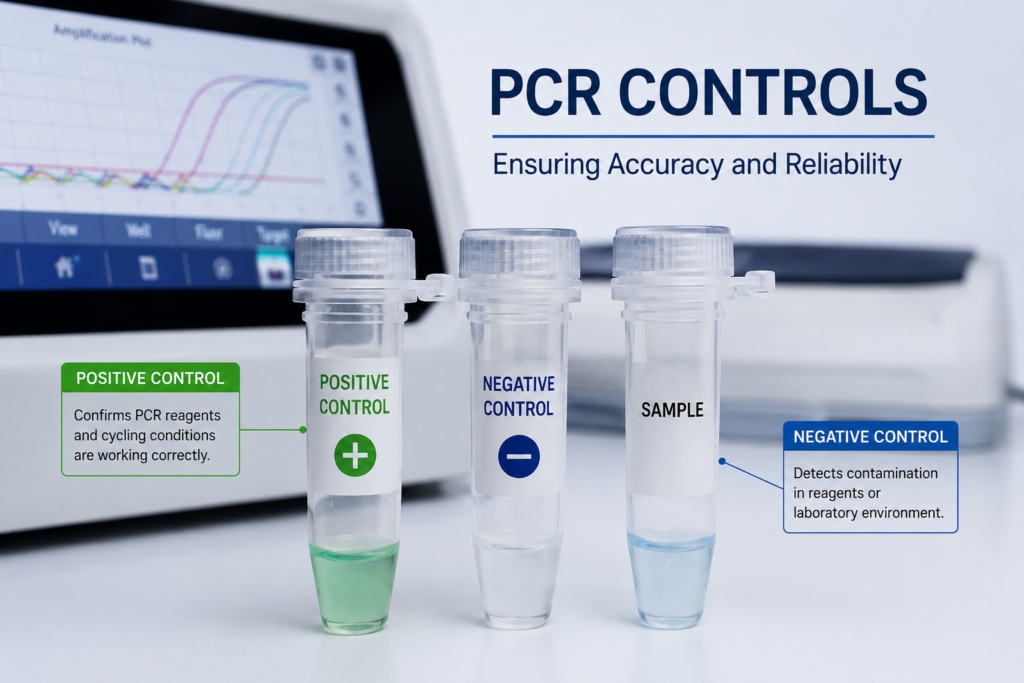
- A positive control is a sample that is already known to contain the target genetic material (such as a specific virus or gene). It should always produce a positive result. If it does not, something has gone wrong with the reagents, equipment, or procedure.
- A negative control is a sample that is known to contain no target genetic material at all, usually just water or a buffer solution. It should always produce a negative result. If it turns positive, this signals contamination somewhere in the testing process.
Together, these two controls act like a built-in quality check. They do not test the patient; they test the test itself. Without them, a laboratory would have no reliable way to know whether a patient’s PCR result reflects true biology or a technical mistake.
History of PCR Controls
PCR was invented by Kary Mullis in 1983, a discovery that later earned him the Nobel Prize in Chemistry in 1993. The technique allowed scientists to amplify, or make many copies of, a specific DNA segment within hours, something that previously took much longer using older cloning methods.
As PCR became widely adopted in the late 1980s and 1990s, laboratories quickly discovered a serious problem: contamination. Because PCR could detect even a single copy of DNA, laboratories using it for diagnostic testing began reporting false positive results caused by tiny amounts of contaminating DNA from previous reactions, lab surfaces, or even the air.
In response, professional bodies such as the Clinical and Laboratory Standards Institute (CLSI) and organizations overseeing molecular diagnostics developed formal guidelines requiring the routine use of positive and negative controls in every PCR run. Over time, this practice became a standard part of good laboratory practice (GLP) and a mandatory requirement in accredited clinical laboratories worldwide.
Classification of PCR Controls
PCR Negative and positive controls can be broadly classified based on their role in the testing process.
Control Type | Purpose | Expected Result |
Positive control | Confirms the reaction can detect the target if present | Must be positive |
Negative control (No Template Control, NTC) | Confirms no contamination is present | Must be negative |
Internal control | Confirms the sample itself was processed correctly | Must show expected signal |
Extraction control | Confirms the nucleic acid extraction step worked | Must show expected result |
Inhibition control | Confirms no substances are blocking the reaction | Must amplify normally |
This classification shows that “control” in PCR is not a single concept. Different controls check different steps of the process, from sample collection to final detection.
Types of PCR Controls
- Positive Control
A sample containing a known, confirmed amount of the target sequence, often a synthetic DNA fragment, a previously confirmed patient sample, or a laboratory-prepared plasmid. It proves that the PCR reagents, primers, and machine are functioning correctly.
- Negative Control (No Template Control or NTC)
A sample with no DNA or RNA template at all, typically nuclease-free water. It should never produce a positive signal. If it does, contamination has likely occurred during reagent preparation or sample handling.
- Internal Control (IC)
Added directly into the patient’s sample, this control checks whether the sample itself was collected, extracted, and processed correctly. If the internal control fails even when the target is negative, the result may be unreliable rather than a true negative.
- Extraction (Process) Control
A control that goes through the entire nucleic acid extraction process alongside patient samples, confirming that the extraction step itself did not fail or introduce errors.
- Inhibition Control
Checks whether substances in the patient sample, such as blood components or mucus, are inhibiting the PCR reaction and causing a false negative result.
- Non-Template Control vs No-Amplification Control
Some laboratories distinguish between a true “no template” control (empty reaction) and a “no amplification” control used to check background fluorescence in real-time PCR systems.
Components and Materials Used in PCR Controls
To run positive and negative controls correctly, a laboratory typically needs:
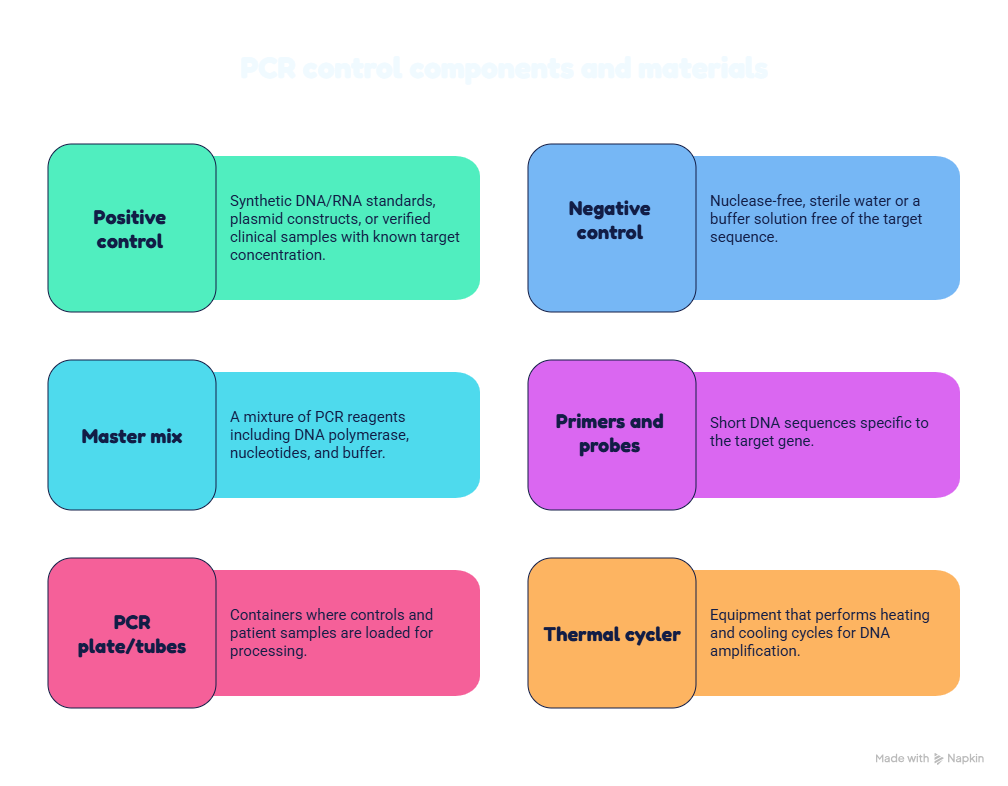
- Positive control material: Synthetic DNA/RNA standards, plasmid constructs, or previously verified clinical samples with a known concentration of the target.
- Negative control material: Nuclease-free, sterile water or a buffer solution free of the target sequence.
- Master mix: A mixture of PCR reagents, including DNA polymerase enzyme, nucleotides, and buffer, used identically across all samples and controls.
- Primers and probes: Short DNA sequences specific to the target gene, used consistently in patient samples and controls alike.
- PCR plate or tubes: Where controls and patient samples are loaded separately but processed under identical conditions.
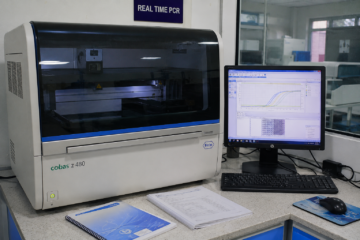
- Thermal cycler or real-time PCR machine: The equipment that performs the repeated heating and cooling cycles needed for DNA amplification.
Principle Behind PCR Controls
The core principle behind the PCR positive and negative control is simple: a test result is only meaningful if the test itself is proven reliable during that specific run.
PCR works by repeatedly heating and cooling a sample to allow specific DNA sequences to be copied exponentially, doubling with each cycle. Because this process is so sensitive, it can detect an extremely small amount of genetic material, but this sensitivity also means small errors can produce misleading results.
By including a known positive sample and a known negative sample in every batch, laboratories create an internal benchmark. If the positive control fails to amplify, or the negative control unexpectedly shows amplification, the entire batch of patient results becomes questionable and must be repeated.
Working Principle and Mechanism
How the Positive Control Works
The positive control contains a guaranteed copy number of the target sequence. During amplification, the PCR machine should detect a clear, expected amplification curve (in real-time PCR) or a visible band (in traditional gel-based PCR) within an expected cycle threshold (Ct) range. This confirms that the primers, enzyme, and thermal cycling conditions are functioning as intended.
How the Negative Control Works
The negative control contains no target DNA or RNA. Since there is nothing for the primers to bind to and amplify, no signal should appear. If a positive signal does appear in this control, it strongly suggests contamination, such as:
- Carryover DNA from previous PCR runs
- Cross-contamination between samples during pipetting
- Contaminated reagents or water
Mechanism of Detection
In real-time PCR (qPCR), fluorescent dyes or probes release a signal proportional to the amount of DNA produced. A graph called an amplification curve is generated, and the cycle number at which fluorescence crosses a set threshold is called the Cycle threshold (Ct value). Lower Ct values mean more starting genetic material was present, while higher Ct values suggest a smaller amount.
Procedure: How PCR Controls Are Set Up and Run
- Prepare the master mix, primers, and probes according to the assay protocol, ensuring the same batch is used for all samples and controls.
- Label separate wells or tubes clearly for the positive control, negative control, and patient samples.
- Load the negative control first, ideally in a separate area or using dedicated pipettes, to minimize contamination risk.
- Load the positive control last, physically separated from patient samples and negative controls to prevent accidental cross-contamination.
- Run the PCR program (thermal cycling) exactly as validated for the assay.
- Review the amplification curves or gel bands for all controls before interpreting any patient results.
- Only proceed to interpret patient sample results if both controls behave as expected.
Applications of PCR Positive and Negative Controls
- Infectious Disease Diagnostics: Confirming the accuracy of tests for viruses (such as HIV, hepatitis, influenza, and SARS-CoV-2), bacteria (such as Mycobacterium tuberculosis), and other pathogens.
- Genetic Testing: Validating PCR-based tests used to detect inherited mutations or genetic disorders.
- Forensic Science: Ensuring DNA profiling results in criminal investigations are free from contamination.
- Research Laboratories: Verifying experimental PCR results before drawing scientific conclusions.
- Food Safety Testing: Confirming PCR-based detection of foodborne pathogens or genetically modified organisms (GMOs).
- Blood Bank and Transplant Screening: Supporting accurate detection of transfusion-transmissible infections.
Advantages of Using PCR Positive and Negative Controls
- Confirms that reagents, primers, and equipment are functioning correctly before trusting any result.
- Detects contamination early, preventing false positive reports that could lead to unnecessary treatment or anxiety.
- Detects reaction failure, preventing false negative reports that could miss a true infection.
- Supports accreditation and regulatory compliance in clinical laboratories.
- Builds confidence in molecular diagnostic results among clinicians and patients.
- Provides an internal benchmark for comparing Ct values and interpreting borderline results.
Disadvantages and Limitations
- Adds extra cost, since controls consume the same reagents as patient samples without generating direct clinical revenue.
- Increases workload and turnaround time, as controls must be prepared, run, and reviewed for every batch.
- Does not guarantee accuracy of an individual patient sample; controls confirm the batch process, not each specific specimen (unless internal controls are also used).
- Requires strict laboratory discipline; controls are only useful if handled and interpreted correctly.
- A failed control run means the entire batch may need to be repeated, delaying results for all patients in that run.
Clinical Significance
In clinical microbiology and molecular diagnostics, the PCR positive and negative control directly affects patient care decisions. A false positive result could lead to unnecessary isolation, unnecessary treatment, or psychological distress for a patient. A false negative result could delay treatment, allow disease transmission to continue, or miss a critical diagnosis.
For example:
- In tuberculosis testing, a false negative PCR result could delay treatment for an infectious patient.
- In prenatal genetic testing, a false positive result could cause unnecessary emotional distress and further invasive testing.
- In outbreak investigations, contamination-driven false positives could distort public health data and response decisions.
This is why regulatory and accreditation bodies, including CLSI and clinical laboratory accreditation programs, require documented use of positive and negative controls in every diagnostic PCR run, without exception.
Interpretation of Results
Positive Control Result | Negative Control Result | Interpretation | Action |
Positive (as expected) | Negative (as expected) | Run is valid | Proceed to interpret patient results |
Negative (unexpected) | Negative (as expected) | Reaction failure | Repeat the entire run; check reagents and equipment |
Positive (as expected) | Positive (unexpected) | Contamination detected | Discard results; investigate source of contamination |
Negative (unexpected) | Positive (unexpected) | Multiple failures | Do not report results; full troubleshooting required |
As a general rule, patient results should never be interpreted or reported if either control behaves unexpectedly.
Frequently Observed Errors
- Skipping controls to save time or reagents, which compromises the reliability of every result in that run.
- Loading the positive control before the negative control, increasing the risk of cross-contamination.
- Using an expired or degraded positive control, leading to false reaction failure.
- Reusing pipette tips between samples and controls, a major contamination risk.
- Misreading borderline Ct values without comparing them properly against the control’s expected range.
- Failing to document control results, which creates problems during laboratory audits and accreditation reviews.
Troubleshooting PCR Control Failures
Problem | Likely Cause | Recommended Action |
Positive control fails to amplify | Expired reagents, incorrect thermal cycling, degraded control material | Check expiry dates, verify machine calibration, replace control material |
Negative control shows amplification | Contamination from samples, reagents, or air | Re-clean work area, use fresh reagents, review pipetting technique |
Inconsistent Ct values across runs | Reagent lot variation, equipment drift | Recalibrate equipment, standardize reagent lots, retrain staff |
Internal control fails in a patient sample | Poor sample quality or inhibitors present | Re-extract sample, dilute sample, repeat testing |
Care and Maintenance of PCR Control Materials
- Store positive control material at the manufacturer-recommended temperature, typically -20°C or lower, to preserve its genetic material.
- Avoid repeated freeze-thaw cycles, as these can degrade the control’s DNA or RNA and cause false reaction failures.
- Prepare negative controls fresh whenever possible, using properly sterilized, nuclease-free water.
- Label all control materials clearly with lot number, expiry date, and preparation date.
- Regularly calibrate and service the PCR thermal cycler or real-time PCR machine according to the manufacturer’s maintenance schedule.
- Maintain separate, dedicated workspaces and equipment for pre-PCR (sample and mix preparation) and post-PCR (amplified product handling) steps to reduce contamination risk.
Quality Assurance: IQC and EQA for PCR Testing
Internal Quality Control (IQC)
- Running a positive and negative control with every batch of patient samples, without exception.
- Monitoring and recording Ct values of controls over time to detect gradual equipment or reagent drift.
- Documenting all control results as part of the laboratory’s quality management system.
- Conducting regular staff competency assessments in pipetting technique and contamination prevention.
External Quality Assessment (EQA)
- Participating in proficiency testing programs where an external body sends blind samples to verify the laboratory’s PCR accuracy.
- Undergoing periodic accreditation audits (such as those aligned with ISO 15189 or CLSI guidelines) to confirm control procedures meet international standards.
- Comparing performance against other laboratories to identify systematic errors that internal checks alone might miss.
Safety Precautions
- Always wear appropriate personal protective equipment (PPE), including gloves and lab coats, when handling PCR reagents and controls.
- Use dedicated, calibrated pipettes and filter tips to minimize cross-contamination between samples and controls.
- Physically separate pre-amplification and post-amplification work areas to prevent amplified DNA product from contaminating fresh reactions.
- Dispose of used reagents, tubes, and control materials according to institutional biohazard waste protocols.
- Handle positive control materials, especially those derived from infectious agents, according to appropriate biosafety level guidelines.
Key Takeaways
- The PCR positive and negative control is essential for confirming that a PCR test is working correctly before any patient result is trusted.
- A positive control must always show a positive result; a negative control must always show a negative result.
- Different control types, including internal, extraction, and inhibition controls, check different steps of the testing process.
- Contamination is the most common cause of an unexpected positive result in the negative control.
- Reaction failure, expired reagents, or equipment issues are common causes of an unexpected negative result in the positive control.
- Patient results should never be reported if either control behaves unexpectedly.
- Regular internal quality control and external quality assessment are required to maintain reliable PCR testing in accredited laboratories.
Conclusion
The PCR positive and negative control may not be visible to patients, but it is one of the most important safeguards in modern molecular diagnostics. Every time a laboratory reports a PCR result, whether for an infectious disease, a genetic condition, or a research sample, that result depends on the quiet, consistent presence of these two reference samples working correctly in the background.
Understanding how PCR controls work, why they matter, and what can go wrong helps students, laboratory professionals, and healthcare workers appreciate the rigorous quality assurance built into molecular testing. As PCR technology continues to expand into new diagnostic areas, from infectious disease surveillance to personalized medicine, the principles behind the PCR positive and negative control will remain a fundamental pillar of trustworthy, science-based healthcare.
For anyone working in or studying laboratory medicine, mastering the logic of PCR controls is not just a technical skill; it is a core part of ensuring that every diagnostic result reflects true biology rather than a hidden technical error.
Frequently Asked Questions (FAQs)
What is the main purpose of a PCR positive and negative control?
The main purpose is to confirm that a PCR test is working correctly. The positive control proves the test can detect the target if present, while the negative control proves there is no contamination causing a false result.
What happens if the negative control shows a positive result?
This indicates contamination somewhere in the testing process, such as cross-contamination between samples or contaminated reagents. The results from that PCR run should not be reported, and the laboratory must investigate the source before repeating the test.
What happens if the positive control fails to show a positive result?
This suggests a technical problem, such as expired reagents, incorrect thermal cycling conditions, or equipment malfunction. The entire run is considered invalid, and patient results from that batch cannot be trusted until the issue is resolved and the test is repeated.
Is an internal control the same as a positive control?
No. An internal control is added directly into each patient sample to confirm that the sample itself was processed correctly, while a positive control is a separate, known sample used to confirm the overall PCR reaction is working.
Why is the negative control loaded before the positive control during setup?
Loading the negative control first reduces the risk of contamination, since the positive control contains a concentrated amount of target genetic material that could accidentally contaminate other samples if handled earlier in the process.
Can a laboratory skip running controls to save time?
No. Skipping positive and negative controls compromises the reliability of every patient result in that batch and violates standard laboratory quality assurance protocols required by accreditation bodies.