
Introduction
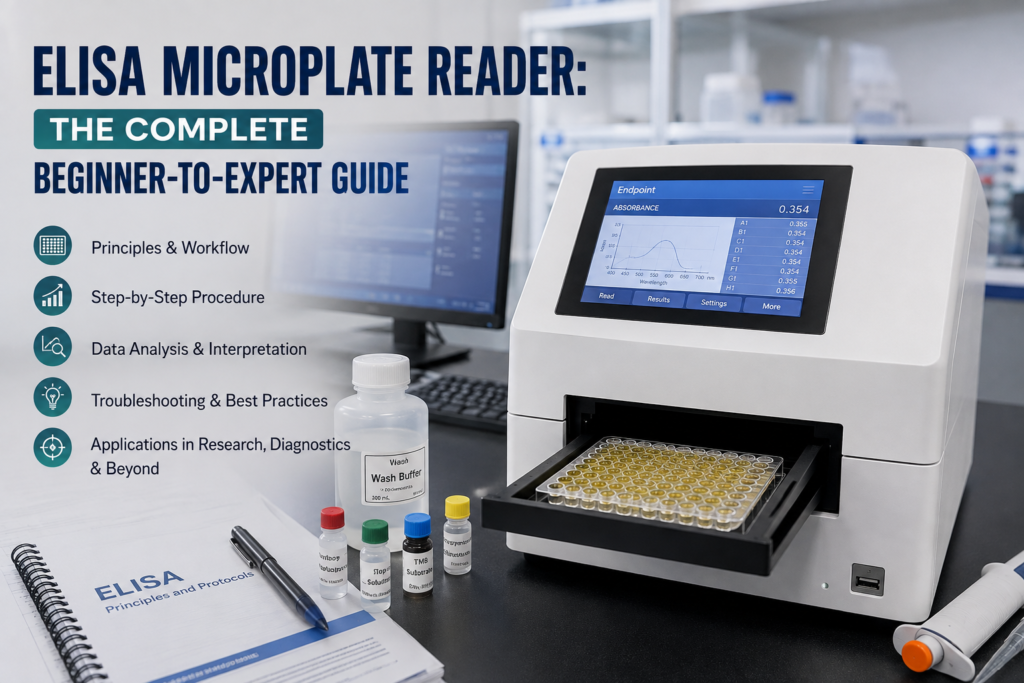
An elisa microplate reader is one of the most important instruments used in modern clinical and research laboratories. If you have ever wondered how doctors confirm infections like HIV, hepatitis, or COVID-19 through blood tests, this small but powerful machine plays a central role in that process. It reads the color changes that happen during a laboratory test called ELISA and turns them into numbers that scientists can interpret.
Definition
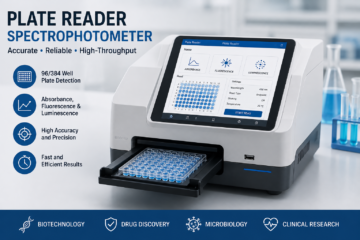
An elisa microplate reader, also called an ELISA plate reader or absorbance microplate reader, is a laboratory instrument that measures the amount of light absorbed or emitted by samples placed in the small wells of a microplate. ELISA stands for Enzyme-Linked Immunosorbent Assay, a widely used laboratory test that detects and measures substances such as antibodies, antigens, hormones, or proteins in a liquid sample, usually blood serum or plasma.
In simple words, the elisa microplate reader is the “eye” of the ELISA test. After the chemical reaction in the test produces a color change, the reader shines light through each well and measures how much of that light is absorbed. This measurement, called absorbance or optical density (OD), tells the laboratory how much of the target substance is present in the sample.
History
Understanding where the elisa microplate reader came from helps us appreciate how far diagnostic technology has come.
- 1960s: Radioimmunoassay (RIA) was the main method used to detect antigens and antibodies, but it required radioactive materials, which posed safety risks.
- 1971: Two scientists, Eva Engvall and Peter Perlmann, along with Anton Schuurs and Bauke van Weemen working independently, developed the ELISA technique as a safer alternative to RIA.
- 1970s–1980s: As ELISA testing became popular, laboratories needed a faster way to read results than manually checking color changes with the naked eye. This need led to the development of the first automated microplate readers.
- 1990s onward: With advances in electronics and software, microplate readers became more precise, faster, and capable of reading multiple wavelengths and formats, including fluorescence and luminescence.
- Present day: Modern elisa microplate readers are fully automated, connected to computer software, and capable of processing 96 or even 384 samples at once with high accuracy.
This evolution transformed ELISA from a slow, manual process into a fast, reliable, and widely trusted diagnostic method used across the globe.
Classification of Microplate Readers
Microplate readers can be classified based on the detection method they use. Here is a simple breakdown:
Type | Detection Method | Common Use |
Absorbance reader | Measures light absorbed by the sample | Standard ELISA testing |
Fluorescence reader | Measures light emitted after excitation | Sensitive protein and DNA assays |
Luminescence reader | Measures light produced by a chemical reaction | High-sensitivity assays, reporter gene studies |
Multi-mode reader | Combines absorbance, fluorescence, and luminescence | Research laboratories needing flexibility |
The most common type used specifically for ELISA testing in clinical laboratories is the absorbance microplate reader, which is often simply called the elisa microplate reader.
Types of ELISA Microplate Readers
Beyond the detection method, elisa microplate readers also come in different designs based on how samples are processed:
- Single-Wavelength Readers
These readers measure absorbance at only one wavelength. They are simple, affordable, and suitable for basic ELISA testing in smaller laboratories.
- Dual-Wavelength Readers
These use two wavelengths — one main reading wavelength and one reference wavelength — to correct for background interference such as scratches on the plate or dust particles. This improves accuracy.
- Filter-Based Readers
These use physical optical filters to select the wavelength of light. They are cost-effective but limited to fixed wavelengths.
- Monochromator-Based Readers
These use a prism or grating system to select any wavelength within a range, offering greater flexibility for research applications.
- Fully Automated Readers
These are integrated into robotic ELISA processing systems that can wash, incubate, and read plates automatically, reducing human error and saving time in high-volume laboratories.
Components/Parts of an ELISA Microplate Reader
To understand how the machine works, it helps to know its main parts:
- Light Source – Usually a tungsten-halogen or xenon flash lamp that produces the light beam used for measurement.
- Wavelength Selector (Filter or Monochromator) – Selects the specific wavelength of light needed for the test, since different substances absorb light differently.
- Optical Fiber or Light Path – Directs the light beam through each well of the microplate.
- Microplate Carrier/Holder – A tray that holds the standard 96-well (or 384-well) plate steady during reading.
- Detector (Photodetector) – Measures the amount of light that passes through the sample after some of it has been absorbed.
- Amplifier and Analog-to-Digital Converter (ADC) – Converts the light signal into an electrical signal, and then into digital data.
- Microprocessor/Computer Interface – Processes the digital data and displays or stores the absorbance readings.
- Display Screen or Connected Software – Shows the results, often as a printed report or exported spreadsheet.
Each of these parts works together in a precise sequence to produce an accurate reading within seconds.
Principle
The elisa microplate reader works on the principle of spectrophotometry, a scientific method that measures how much light a substance absorbs at a specific wavelength.
Here is the basic idea in simple terms:
- A colored solution absorbs more light when it is more concentrated.
- A colorless or lightly colored solution absorbs less light.
- By measuring how much light passes through the sample (called transmittance) and calculating how much was absorbed (absorbance), the reader can estimate the concentration of the substance being tested.
This relationship is described by the Beer-Lambert Law, which states that absorbance is directly proportional to the concentration of the substance in the solution and the distance the light travels through it.
Working Principle / Mechanism
Let’s break down exactly how the elisa microplate reader produces a result, step by step:
- Light Emission: The lamp inside the reader emits a beam of light.
- Wavelength Selection: The wavelength selector filters the light so only the specific wavelength needed for the test passes through (commonly 450 nm for most ELISA kits).
- Light Passes Through the Well: The selected light beam passes vertically through the liquid sample in each well of the microplate.
- Absorption Occurs: If the sample contains the colored product formed during the ELISA reaction, it absorbs part of the light. The more colored product present, the more light gets absorbed.
- Detection: The remaining light (the light that was not absorbed) reaches the photodetector on the other side of the well.
- Signal Conversion: The photodetector converts the light intensity into an electrical signal.
- Digital Processing: This electrical signal is converted into a digital value by the analog-to-digital converter.
- Result Calculation: The built-in software calculates the optical density (OD) value for each well and compares it against a standard curve to determine the concentration of the substance.
- Report Generation: The final results are displayed on screen and can be printed or exported for interpretation.
This entire mechanism typically takes just a few seconds per plate, allowing laboratories to process many samples quickly.
Procedure: How ELISA Testing Uses the Microplate Reader
While the reader itself only performs the final reading step, it helps to understand the full ELISA testing procedure to see where the elisa microplate reader fits in.
Step-by-Step ELISA Procedure
- Coating: The wells of the microplate are coated with a specific antigen or antibody that will bind to the target substance.
- Blocking: A blocking solution is added to prevent non-specific binding, which could cause false results.
- Sample Addition: Patient samples (such as serum) are added to the wells and incubated, allowing the target substance to bind if present.
- Washing: Unbound material is washed away using a plate washer.
- Enzyme-Linked Antibody Addition: A secondary antibody linked to an enzyme is added, which binds specifically to the target substance.
- Washing Again: Excess enzyme-linked antibody is washed off.
- Substrate Addition: A substrate solution is added, which reacts with the enzyme to produce a color change.
- Stopping the Reaction: A stop solution is added to halt the color development at a consistent point.
- Reading the Plate: The plate is placed into the elisa microplate reader, which measures the absorbance of each well at the appropriate wavelength.
- Result Interpretation: The software compares the readings to control samples and calculates whether the result is positive, negative, or borderline.
Applications
The elisa microplate reader is used across many fields of science and medicine, including:
- Infectious Disease Testing: Detecting HIV, hepatitis B and C, dengue, and COVID-19 antibodies or antigens.
- Hormone Testing: Measuring hormones such as thyroid hormones, insulin, and reproductive hormones.
- Allergy Testing: Identifying specific allergen antibodies in patient blood.
- Cancer Marker Detection: Measuring tumor markers used in cancer screening and monitoring.
- Food Safety Testing: Detecting contaminants, allergens, or pathogens in food samples.
- Veterinary Diagnostics: Testing animals for infectious diseases.
- Research Applications: Studying protein interactions, drug development, and vaccine research.
- Environmental Testing: Detecting toxins or pollutants in water and soil samples.
Advantages
The widespread use of the elisa microplate reader is due to several important benefits:
- High Accuracy: Provides precise, objective measurements compared to visual color judgment.
- High Throughput: Can process 96 or more samples simultaneously, saving time.
- Speed: Delivers results within seconds after the plate is inserted.
- Automation Compatibility: Can be integrated with robotic systems for fully automated testing.
- Versatility: Many models can measure absorbance, fluorescence, and luminescence.
- Data Management: Connected software allows easy storage, printing, and sharing of results.
- Cost-Effective for Large Volumes: Reduces the cost per test when processing many samples.
Disadvantages
Despite its benefits, the elisa microplate reader also has some limitations:
- Initial Cost: High-quality readers can be expensive to purchase.
- Maintenance Requirements: Requires regular calibration and servicing to maintain accuracy.
- Technical Training Needed: Operators need proper training to avoid errors.
- Sensitivity to Interference: Bubbles, dust, or scratches on the plate can affect readings.
- Limited to Compatible Plates: Requires standardized microplates, which adds to ongoing costs.
- Power Dependency: Requires stable electricity and, in some cases, backup power to avoid data loss.
Clinical Significance
The clinical importance of the elisa microplate reader cannot be overstated. It plays a direct role in patient diagnosis and treatment decisions. For example:
- A positive HIV antibody test read by the elisa microplate reader can prompt further confirmatory testing and early treatment initiation.
- Hormone level readings help doctors diagnose thyroid disorders or fertility issues.
- Allergy panel results guide allergists in recommending appropriate avoidance strategies or treatments.
- Tumor marker trends over time help oncologists monitor how well a cancer treatment is working.
Because these results directly influence medical decisions, the accuracy and reliability of the elisa microplate reader are critical to patient safety.
Interpretation of Results
Understanding how to interpret ELISA reader results is essential for laboratory professionals.
Optical Density (OD) and Cut-Off Value
Most ELISA tests use a cut-off value, calculated from control samples, to determine whether a result is positive or negative.
Result Type | OD Value Compared to Cut-Off | Interpretation |
Positive | OD greater than cut-off | Target substance likely present |
Negative | OD less than cut-off | Target substance likely absent |
Borderline/Equivocal | OD close to cut-off (within gray zone) | Retesting recommended |
Laboratories typically calculate a positive-to-negative (P/N) ratio or a signal-to-cut-off (S/CO) ratio to standardize interpretation across different test runs.
Standard Curve Interpretation
For quantitative ELISA tests, results are plotted against a standard curve made from samples of known concentration. The reader software automatically calculates unknown sample concentrations based on where their OD values fall on this curve.
Frequently Observed Errors
Even experienced laboratory professionals can encounter errors when using an elisa microplate reader. Common issues include:
- Edge Effect: Wells on the outer edge of the plate may show different readings due to temperature variation during incubation.
- Bubble Interference: Air bubbles in the well can scatter light and cause falsely high or low readings.
- Plate Misalignment: Incorrect plate placement can cause the reader to measure the wrong well.
- Wavelength Selection Errors: Using the wrong wavelength setting produces inaccurate absorbance values.
- Incomplete Washing: Leftover reagents from previous steps can cause false-positive results.
- Reagent Expiry: Using expired substrate or antibody reagents affects color development and accuracy.
- Lamp Aging: An old or weakening lamp can reduce light intensity, affecting readings over time.
Troubleshooting
Here is a simple troubleshooting table for common elisa microplate reader problems:
Problem | Possible Cause | Solution |
No reading displayed | Reader not powered on or plate not detected | Check power connection and plate placement |
Inconsistent results across wells | Air bubbles or uneven pipetting | Gently tap plate to remove bubbles; recheck pipetting technique |
Unusually high background readings | Contaminated wells or incomplete washing | Repeat washing steps carefully |
Error message on screen | Software glitch or lamp failure | Restart device; check lamp status |
Drifting OD values over time | Lamp aging or dirty optical path | Schedule lamp replacement and cleaning |
Wrong wavelength results | Incorrect filter selected | Confirm correct wavelength setting before reading |
Care and Maintenance
Proper care extends the life of an elisa microplate reader and ensures reliable results:
- Daily Cleaning: Wipe the plate carrier and exterior surfaces with a lint-free cloth to remove dust.
- Avoid Spills: Immediately clean any spilled reagents to prevent damage to internal components.
- Lamp Monitoring: Track lamp usage hours and replace it according to the manufacturer’s recommended schedule.
- Regular Calibration: Perform calibration checks using certified reference standards at scheduled intervals.
- Software Updates: Keep the connected computer software updated for accuracy and security.
- Environmental Control: Keep the reader in a stable, dust-free, and temperature-controlled environment.
- Service Contracts: Arrange periodic professional servicing to catch potential issues early.
Quality Assurance (IQC and EQA)
Quality assurance is essential to ensure that elisa microplate reader results are trustworthy.
Internal Quality Control (IQC)
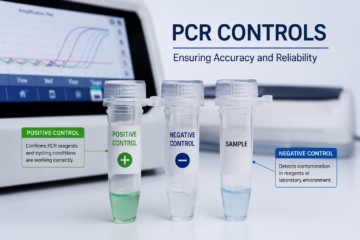
- Running known positive and negative control samples with every test batch.
- Monitoring the coefficient of variation (CV) between replicate wells to check precision.
- Maintaining a quality control chart (such as a Levey-Jennings chart) to track control values over time and detect trends.
External Quality Assessment (EQA)
- Participating in proficiency testing programs, where laboratories test blind samples sent by an external agency and compare results with other labs.
- Regular inter-laboratory comparisons to ensure consistency across different facilities.
- Documentation and corrective action plans whenever results fall outside acceptable ranges.
Both IQC and EQA work together to build confidence in the accuracy of results produced using the elisa microplate reader, which is especially important since these results guide real medical decisions.
Safety Precautions
Working with an elisa microplate reader and ELISA testing involves handling biological samples, so safety is a priority:
- Always wear personal protective equipment (PPE), including gloves, lab coats, and eye protection.
- Handle all patient samples as potentially infectious material.
- Dispose of used plates and reagents according to biohazard waste protocols.
- Avoid direct contact with substrate and stop solutions, as some can be irritating to skin and eyes.
- Ensure the reader is properly grounded electrically to prevent electrical hazards.
- Do not attempt internal repairs without proper training; contact a qualified service technician instead.
- Keep the workspace well-ventilated, especially when using chemical substrates.
Key Points
- An elisa microplate reader measures absorbance to detect and quantify substances in ELISA tests.
- It works on the principle of spectrophotometry, following the Beer-Lambert Law.
- Common wavelengths used include 450 nm, though this depends on the specific test kit.
- The reader is the final and critical step in the ELISA testing procedure.
- Regular calibration, maintenance, and quality control are essential for accurate results.
- Applications span infectious disease testing, hormone testing, cancer screening, and more.
- Proper safety precautions protect laboratory staff from biological and chemical hazards.
Conclusion
The elisa microplate reader is a cornerstone instrument in modern diagnostic and research laboratories. From confirming infectious diseases to monitoring hormone levels and supporting cancer research, this device turns invisible biological reactions into clear, measurable data that healthcare providers can trust.
Understanding how it works, from the basic principle of spectrophotometry to the detailed working mechanism, helps students, laboratory professionals, and curious readers appreciate the science behind everyday medical testing. Proper use, regular maintenance, and strict quality control ensure that this instrument continues to deliver the accurate results that patients and doctors depend on.
As diagnostic technology continues to advance, the elisa microplate reader remains a reliable and essential tool, bridging the gap between complex biochemical reactions and clear, actionable medical information.
Frequently Asked Questions (FAQs)
What is an elisa microplate reader used for?
It is used to measure the color intensity (absorbance) produced during an ELISA test, which helps determine whether a substance like an antibody, antigen, or hormone is present and in what amount.
What wavelength is commonly used in ELISA microplate readers?
Most ELISA tests are read at 450 nm, though the exact wavelength depends on the specific substrate used in the test kit. Some tests also use a reference wavelength, such as 620–650 nm.
How accurate is an elisa microplate reader?
When properly calibrated and maintained, these readers provide highly accurate and reproducible results, which is why they are trusted in clinical diagnostics worldwide.
Can an elisa microplate reader be used for other tests besides ELISA?
Yes. Many microplate readers can also measure protein concentration, enzyme activity, and cell viability assays, depending on their design and capabilities.
How often should an elisa microplate reader be calibrated?
Calibration frequency depends on the manufacturer’s guidelines and laboratory protocols, but it is typically performed periodically, such as monthly or quarterly, along with checks before critical test runs.
What causes inaccurate readings in an ELISA microplate reader?
Common causes include air bubbles, dirty optical paths, incorrect wavelength settings, plate misalignment, and reagent contamination.
Is an elisa microplate reader the same as a spectrophotometer?
They work on similar principles, but a spectrophotometer typically reads a single sample in a cuvette, while an elisa microplate reader reads multiple samples simultaneously in the wells of a microplate.
What is the difference between qualitative and quantitative ELISA reading?
Qualitative ELISA gives a positive or negative result based on a cut-off value, while quantitative ELISA calculates the exact concentration of the substance using a standard curve.
Can results from an elisa microplate reader be wrong ?
Yes, errors can occur due to technical mistakes, equipment issues, or sample problems. This is why quality control measures and confirmatory testing are important parts of the diagnostic process.
Disclaimer:
The information provided in this article is intended for educational and informational purposes only and should not be considered a substitute for professional medical, laboratory, or technical advice. Always refer to applicable laboratory protocols, manufacturer instructions, professional guidelines, and qualified professionals where appropriate. Please refer to the MeroLab Medical, Laboratory & Educational Disclaimer for complete terms.