
Introduction
Cardiovascular disease screening test results have saved countless lives — and yet millions of people still skip these checks every year. Heart disease remains the leading cause of death worldwide, and one of the most terrifying facts about it is that many people feel completely fine right up until they experience a heart attack or stroke.
That is exactly why cardiovascular disease screening tests exist. They are designed to find problems before you feel them — giving you the power to act early, make changes, and protect your life.
In this article, we walk through 8 essential cardiovascular disease screening tests, explain what each one checks for, share who needs them and when, and help you understand what your results really mean.
What Is a Cardiovascular Disease Screening Test?
A cardiovascular disease screening test is any medical check that looks for signs of heart or blood vessel problems before you have obvious symptoms.
These tests examine things like your blood pressure, cholesterol levels, blood sugar, heart rhythm, and the physical condition of your arteries and heart muscle. Together, they paint a complete picture of your cardiovascular health and show your doctor where risks exist.
According to the American Heart Association (AHA), key risk factors for cardiovascular disease include high blood pressure, high cholesterol, high blood glucose, obesity, poor diet, physical inactivity, and smoking. Most of these have no obvious symptoms — and a cardiovascular disease screening test is the only reliable way to identify them.
Critical Cardiovascular Disease Screening Tests
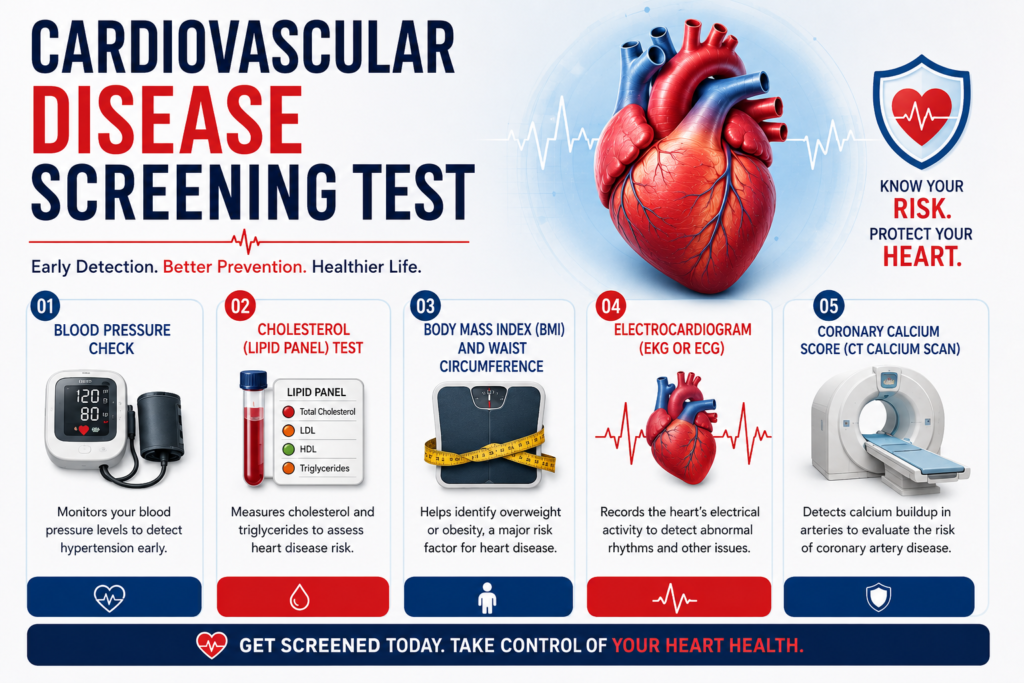
1. Blood Pressure Check
Blood pressure screening is one of the most important cardiovascular disease screening tests — and one of the simplest.
High blood pressure (hypertension) puts enormous strain on the heart and blood vessels. It significantly raises the risk of heart attack, stroke, and heart failure. The frightening truth is that most people with high blood pressure have absolutely no symptoms.
A normal blood pressure reading sits below 120/80 mmHg. If your numbers are higher, your doctor will recommend lifestyle changes, medication, or both.
The Cleveland Clinic recommends that everyone starts blood pressure monitoring from adulthood, with regular re-checks based on their individual risk level.
2. Cholesterol (Lipid Panel) Test
This blood test measures different types of fats in your blood — including LDL (low-density lipoprotein, often called “bad” cholesterol), HDL (high-density lipoprotein or “good” cholesterol), and total triglycerides.
High LDL cholesterol builds up in the walls of arteries, narrowing them over time and dramatically increasing the risk of heart disease and stroke.
Cholesterol screening typically begins at age 20 in healthy adults and should be repeated every four to six years. People with risk factors — such as a family history of heart disease, obesity, or diabetes — may need it more frequently.
3. Blood Glucose (Fasting Blood Sugar) Test
Diabetes and pre-diabetes are powerful risk factors for cardiovascular disease. High blood sugar damages blood vessels and nerves over time, accelerating the process of atherosclerosis (hardening and narrowing of arteries).
A fasting blood glucose test or HbA1c test can detect diabetes and pre-diabetes before serious damage occurs. Managing blood sugar early — through diet, exercise, and medication when needed — significantly reduces cardiovascular risk.
Adults aged 45 and older should have this test regularly. Younger adults with obesity or other risk factors should also be screened.
4. Body Mass Index (BMI) and Waist Circumference
Obesity — particularly excess fat around the abdomen — is a well-established risk factor for cardiovascular disease. A simple BMI calculation and waist measurement can reveal whether a person’s weight is putting their heart under extra stress.
A BMI over 30 or a waist circumference above 35 inches in women and 40 inches in men indicates a higher risk for heart problems, diabetes, and high blood pressure.
These measurements are quick, painless, and typically part of any routine physical examination. They help your doctor understand how lifestyle changes could reduce your cardiovascular risk.
5. Electrocardiogram (EKG or ECG)
An electrocardiogram records the electrical activity of your heart. It can detect irregular heart rhythms (arrhythmias), signs of a previous heart attack, thickening of the heart muscle, and other abnormalities that may not cause any visible symptoms.
An EKG is a non-invasive, painless test that takes only a few minutes. Small electrodes are attached to your chest, arms, and legs, and the machine produces a printout showing your heart’s electrical pattern.
An EKG is often recommended for adults with risk factors for heart disease, those experiencing unexplained chest pain, palpitations, shortness of breath, or dizziness, and as a baseline before certain medical procedures.
6. Exercise Stress Test
This cardiovascular disease screening test checks how your heart performs under physical stress — such as walking on a treadmill or pedaling a stationary bike while your blood pressure and heart rhythm are continuously monitored.
A stress test is particularly useful for detecting coronary artery disease (CAD), which may not be apparent when you are at rest. When the heart works harder, blockages in the arteries can cause abnormal electrical activity or blood flow problems that the test can capture.
In cases where a patient cannot exercise, medication is used to simulate the effects of physical exertion on the heart. Imaging is sometimes added to provide a clearer picture of blood flow to different parts of the heart muscle.
7. Echocardiogram
An ECG uses ultrasound waves to create moving images of the heart. It shows the heart’s size, shape, and how well its chambers and valves are working.
This cardiovascular disease screening test is valuable for identifying structural problems such as valve disease, weakened heart muscle, and fluid around the heart — conditions that may develop quietly before causing obvious symptoms.
Echocardiograms are painless and use no radiation. They are frequently ordered for people with unexplained heart murmurs, breathlessness, or swelling in the legs, as well as those with a family history of inherited heart conditions.
8. Coronary Calcium Score (CT Calcium Scan)
This is a more advanced cardiovascular disease screening test that uses a specialized CT scanner to look for calcium deposits in the walls of the coronary arteries.
Calcium buildup is a direct sign of atherosclerosis — the process of artery hardening that drives heart attacks. The resulting coronary artery calcium (CAC) score helps doctors assess a person’s risk of a future cardiovascular event with remarkable precision.
A score of zero means no calcium is detected, which indicates a very low near-term risk. Higher scores indicate greater plaque buildup and higher risk, guiding decisions about lifestyle changes and medications like statins.
This test is especially recommended for adults in the intermediate-risk category — people for whom the standard risk calculators give uncertain results about whether preventive medication is truly needed.
Who Should Get a Cardiovascular Disease Screening Test?
Not everyone needs every test at the same age or frequency. However, certain groups should make cardiovascular disease screening tests a priority:
- Adults > 40 — Cardiovascular risk naturally increases with age. Routine screening becomes essential.
- People with a family history of heart disease — Genetics play a major role. If a parent or sibling had a heart attack or stroke before age 55 (men) or 65 (women), your risk is significantly elevated.
- People with known risk factors — These include high blood pressure, high cholesterol, diabetes, obesity, smoking, and a sedentary lifestyle.
- People experiencing symptoms — Chest pain, palpitations, shortness of breath, dizziness, or unusual fatigue during activity should all trigger an immediate cardiovascular evaluation.
- Younger adults with multiple risk factors — Cardiovascular disease is not only a problem for older people. Younger individuals with several compounding risk factors may benefit from earlier screening.
- According to the National Library of Medicine, early identification of cardiovascular risk factors and timely intervention are among the most effective strategies for reducing heart disease-related deaths.
What Happens After Screening?
Getting a cardiovascular disease screening test is only the first step. What you do with the results is what truly matters.
If your results are normal, your doctor will advise on how often to repeat each test and what lifestyle habits to maintain for ongoing protection.
If results reveal a risk factor or an early sign of disease, your healthcare provider will build a personalized plan. This may include:
- Lifestyle adjustments — A heart-healthy diet, smoking cessation, Every day physical activity, and weight management
- Medications — Such as statins for cholesterol, antihypertensives for blood pressure, or blood thinners for certain arrhythmias
- Further diagnostic testing — Including more detailed imaging or cardiology referral
- Monitoring — More frequent check-ups to track whether interventions are working
Early action is the most powerful outcome of any cardiovascular disease screening test. Studies consistently show that identifying and managing risk factors before a major cardiac event dramatically improves long-term survival and quality of life.
When Should Screening Begin?
Here is a simple age-based guide for cardiovascular disease screening test timing:
- Age 20+ — Blood pressure, cholesterol, BMI, and blood glucose checks begin
- Age 35–45 — Consider coronary calcium scoring if you have intermediate risk or multiple risk factors
- Age 40+ — More frequent and comprehensive cardiovascular screening is recommended
- Any age — Immediate screening if symptoms are present or if a close family member has been diagnosed with early heart disease
Your doctor will adjust this timeline based on your personal health profile.
Conclusion
A cardiovascular disease screening test is one of the most important things you can do for your long-term health. Heart disease rarely announces itself with clear warning signs early on — and by the time symptoms appear, significant damage may have already been done.
Routine screening changes that equation entirely. It puts knowledge in your hands, giving you and your doctor the opportunity to take action while options are plentiful and outcomes are far better.
Do not wait for symptoms. Talk to your healthcare provider today about which cardiovascular disease screening tests are right for you, and how often you should have them.