Introduction
DNA whole genome sequencing is an advanced molecular technique used to determine the complete DNA sequence of an organism. It reads every nucleotide (A, T, G, C) present in the genome, including coding and non-coding regions.
Today, whole genome DNA sequencing is widely used in clinical diagnostics, microbiology, cancer research, and precision medicine. It provides a full genetic profile, which helps in understanding diseases at the molecular level.
Table of Contents
- Technical Principle of DNA Whole Genome Sequencing
- Types of Sequencing Technologies
- Step-by-Step Procedure
- Quality Control and Data Analysis
- Applications
- Advantages
- Limitations
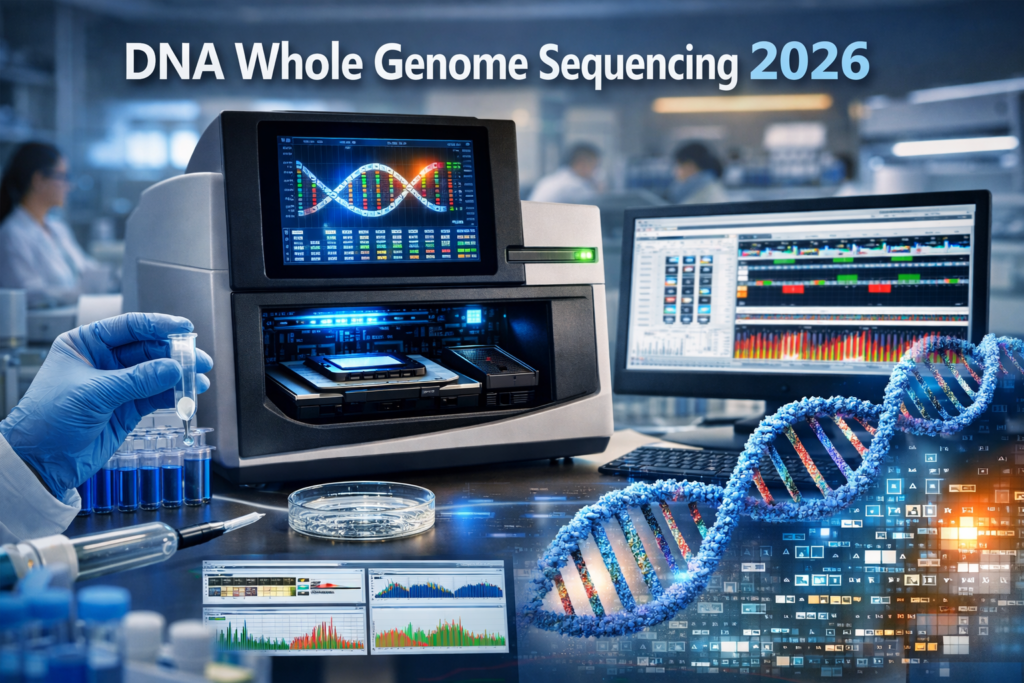
1. What is Whole Genome Sequencing?
Whole genome sequencing (WGS) is a laboratory technique that determines the exact order of all the DNA bases (adenine, thymine, cytosine, and guanine) in an organism’s genome. Unlike targeted genetic tests that look at specific genes, WGS scans the entire genome, capturing all genetic variations. This allows scientists and doctors to gain a complete genetic profile.
2. How Does Whole Genome Sequencing Work?
The process begins by extracting DNA from a sample like blood or saliva. The DNA is then broken into smaller pieces and sequenced using advanced machines. These machines read the DNA letters and produce raw data, which is analyzed by powerful software to reconstruct the entire genome sequence. The result is a comprehensive map of genetic information.
Technical Principle of DNA Whole Genome Sequencing
The core principle of DNA Whole Genome Sequencing is based on determining the exact order of nucleotides in DNA using high-throughput sequencing technologies.
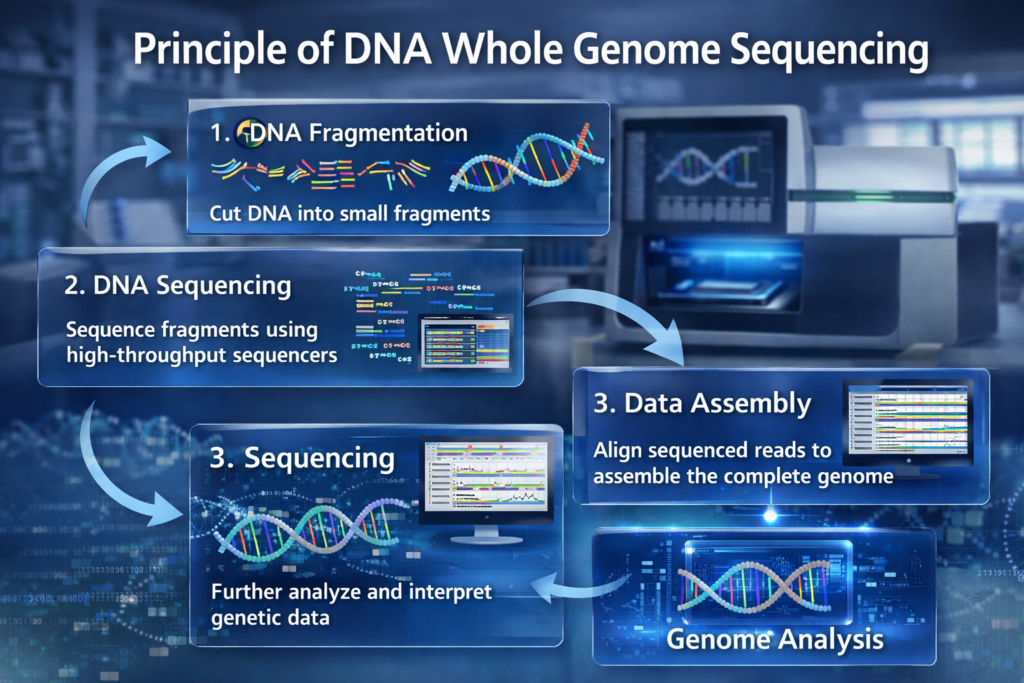
Basic Principle:
- DNA is extracted and fragmented into smaller pieces
- Each fragment is sequenced individually
- Short sequences (reads) are generated
- Bioinformatics tools assemble these reads into a complete genome
Key Scientific Concepts:
- Complementary base pairing (A–T, G–C)
- DNA polymerase activity for strand synthesis
- Fluorescent or electrical signal detection
- Massively parallel sequencing (Next-Generation Sequencing, NGS)
Types of Sequencing Technologies
- Next-Generation Sequencing (NGS)
- Most commonly used method
- Produces millions of reads simultaneously
- High accuracy and cost-effective
- Third-Generation Sequencing
- Long-read sequencing (e.g., nanopore)
- Real-time data generation
- Useful for structural variations
- Shotgun Sequencing
- DNA randomly fragmented and sequenced
- Genome assembled using overlapping regions
Step-by-Step Procedure of DNA Whole Genome Sequencing
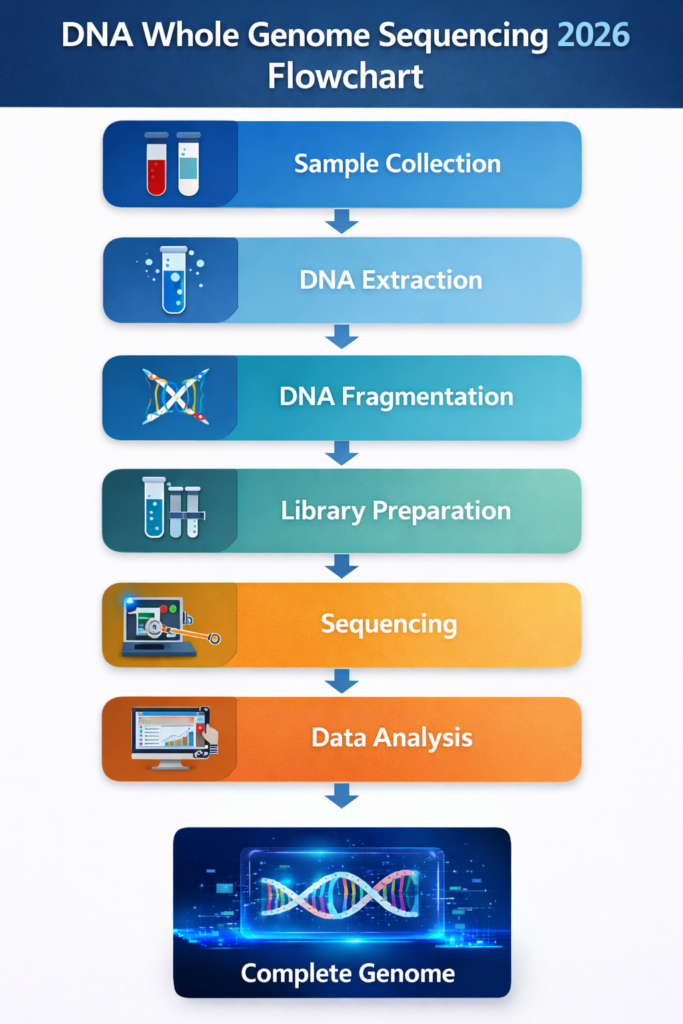
1. Sample Collection and DNA Extraction
- Samples: blood, saliva, tissue, microbial culture
- DNA is extracted using chemical or automated methods
- High-quality, intact DNA is required
2. DNA Quantification and Quality Assessment
- Measured using spectrophotometer or fluorometer
- Purity checked using A260/A280 ratio
- Gel electrophoresis used for integrity
3. DNA Fragmentation
- DNA is broken into small fragments (100–500 bp for NGS)
- Methods:
- Mechanical (sonication)
- Enzymatic digestion
4. Library Preparation
This is a critical step in DNA Whole Genome Sequencing
Steps include:
- End repair
- Adapter ligation
- Index/barcode addition
- PCR amplification
Adapters allow DNA fragments to bind to the sequencing platform.
5. Sequencing Reaction
In Illumina Platform (Example):
- DNA fragments bind to a flow cell
- Bridge amplification forms clusters
- Sequencing by synthesis occurs
Mechanism:
- Fluorescently labeled nucleotides are added
- Each base emits a signal
Detector records sequence
6. Data Generation (Raw Reads)
- Millions of short sequences are generated
- Output format: FASTQ files
- Contains sequence + quality score
7. Bioinformatics Analysis
Key Steps:
- Quality filtering
- Alignment to reference genome
- Variant calling
- Annotation
Tools Used:
- BWA (alignment)
- GATK (variant analysis)
- BLAST (sequence comparison)
8. Data Interpretation
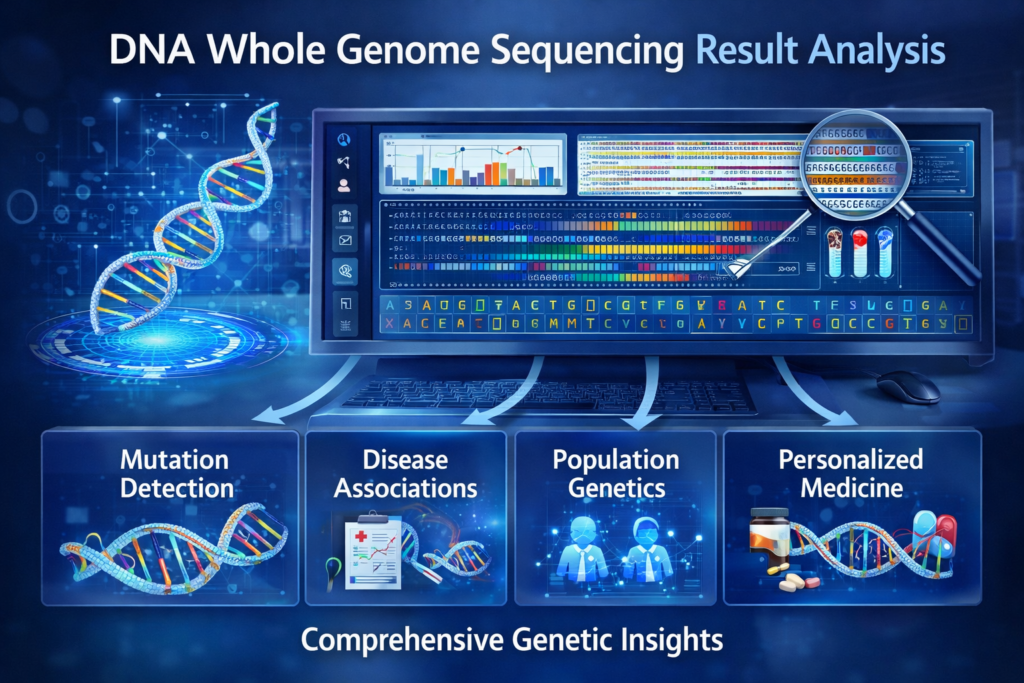
- Identification of mutations (SNPs, insertions, deletions)
- Clinical correlation
- Report generation
Quality Control in DNA Whole Genome Sequencing
Quality control is essential to ensure reliable results.
Important Parameters:
- Read depth (coverage)
- Base quality score (Q score)
- GC content
- Duplication rate
Poor-quality data may lead to incorrect interpretation.
# Applications of DNA Whole Genome Sequencing
DNA whole genome sequencing has wide applications:
Clinical Applications:
- Rare genetic disease diagnosis
- Cancer genomics
- Pharmacogenomics
WGS is used in many fields, including:
- Medical diagnosis of rare genetic disorders
- Cancer research and treatment planning
- Studying inherited diseases
- Personalized medicine tailored to an individual’s genetic profile
- Population genetics and evolutionary biology
Microbiology:
- Pathogen identification
- Outbreak tracking
Research:
- Evolutionary biology
- Gene discovery
Advantages:
- Complete genome analysis
- Detects known and unknown mutations
- High sensitivity and accuracy
- Useful for personalized medicine
Limitations:
- High data complexity
- Requires skilled bioinformatics analysis
- Ethical concerns (genetic privacy)
- Storage of large datasets
Future Perspective
The future of DNA Whole Genome Sequencing is rapidly evolving. With reduced cost and improved technology, it may become a routine diagnostic tool in hospitals.
It will play a major role in:
- Preventive medicine
- Early diagnosis
- Precision treatment
Conclusion:
DNA Whole Genome Sequencing is a powerful and comprehensive tool that allows scientists to study the entire genetic makeup of an organism. Its strong technical foundation, combined with advanced bioinformatics, makes it essential in modern healthcare and research.
Understanding the principle and procedure of DNA Whole Genome Sequencing is crucial for students, researchers, and healthcare professionals working in molecular biology and genomics.
QuiBolt DNA whole genome sequencing
FAQ: DNA Whole Genome Sequencing
What is DNA Whole Genome Sequencing?
DNA Whole Genome Sequencing is a laboratory method used to read the complete DNA sequence of an organism. It analyzes all genetic material, including both coding and non-coding regions, in a single test.
How does DNA Whole Genome Sequencing work?
DNA Whole Genome Sequencing works by breaking DNA into small fragments, sequencing each fragment, and then using computer software to assemble the complete genome sequence.
What is the difference between whole genome sequencing and targeted sequencing?
DNA Whole Genome Sequencing analyzes the entire genome, while targeted sequencing focuses only on specific genes or regions of interest. Whole genome sequencing provides more comprehensive information.
What samples are used for DNA Whole Genome Sequencing?
Common samples for DNA Whole Genome Sequencing include:
- Blood
- Saliva
- Tissue samples
- Microbial cultures
What are the main applications of DNA Whole Genome Sequencing?
DNA Whole Genome Sequencing is used in:
- Disease diagnosis
- Cancer research
- Infectious disease tracking
- Personalized medicine
- Genetic research
Is DNA Whole Genome Sequencing accurate?
Yes, DNA Whole Genome Sequencing is highly accurate, especially when high-quality DNA and advanced sequencing platforms are used. However, proper data analysis is essential for reliable results.
How long does DNA Whole Genome Sequencing take?
The time required for DNA Whole Genome Sequencing can range from a few days to several weeks, depending on the laboratory, technology used, and data analysis process.
What are the advantages of DNA Whole Genome Sequencing?
Key advantages of DNA Whole Genome Sequencing include:
- Complete genetic information
- Detection of rare mutations
- High sensitivity
- Useful for research and clinical diagnosis
What are the limitations of DNA Whole Genome Sequencing?
Some limitations of DNA Whole Genome Sequencing are:
- High cost
- Complex data analysis
- Need for bioinformatics expertise
- Ethical and privacy concerns
Reference Information link
https://www.illumina.com/techniques/sequencing/dna-sequencing/whole-genome-sequencing.html
https://nebula.org/?srsltid=AfmBOopRLhFShLpBv0D5R-uHEfCCV6JI0Ywihc2Jg8lJdsM1_Tpszkt8
https://www.genewiz.com/en-gb/public/services/next-generation-sequencing/whole-genome-sequencing
Medical Disclaimer:
This article is for educational purposes only and does not replace professional medical advice. Always follow the specific instructions provided by your healthcare provider or laboratory.